How to Check a Car’s Mileage History Before Buying
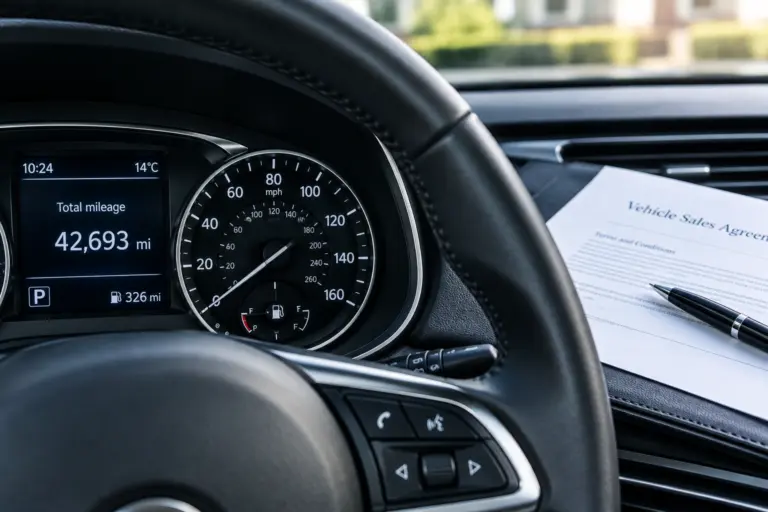
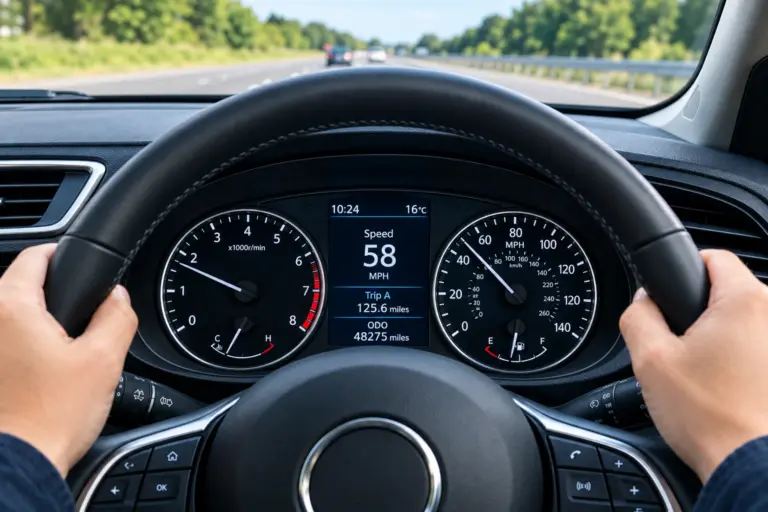
A mileage history check compares a vehicle’s current mileage with previously recorded information to identify inconsistencies and help you understand...
A mileage history check compares a vehicle’s current mileage with previously recorded information to identify inconsistencies and help you understand whether the available records tell a consistent story.
The number displayed on the dashboard is only one part of the picture. A more useful check can involve the vehicle’s MOT history, DVLA information, service and maintenance records, previous invoices and, where appropriate, a private vehicle history check. No single source should be treated as absolute proof that a vehicle’s current mileage is genuine. The aim is to compare the available information and establish whether it tells a consistent story.
This guide covers how UK buyers can check a car’s mileage before handing over any money, what to do when the figures don’t line up, and how to address an incorrect mileage entry in the vehicle’s records.
Check the Car’s MOT Mileage History First
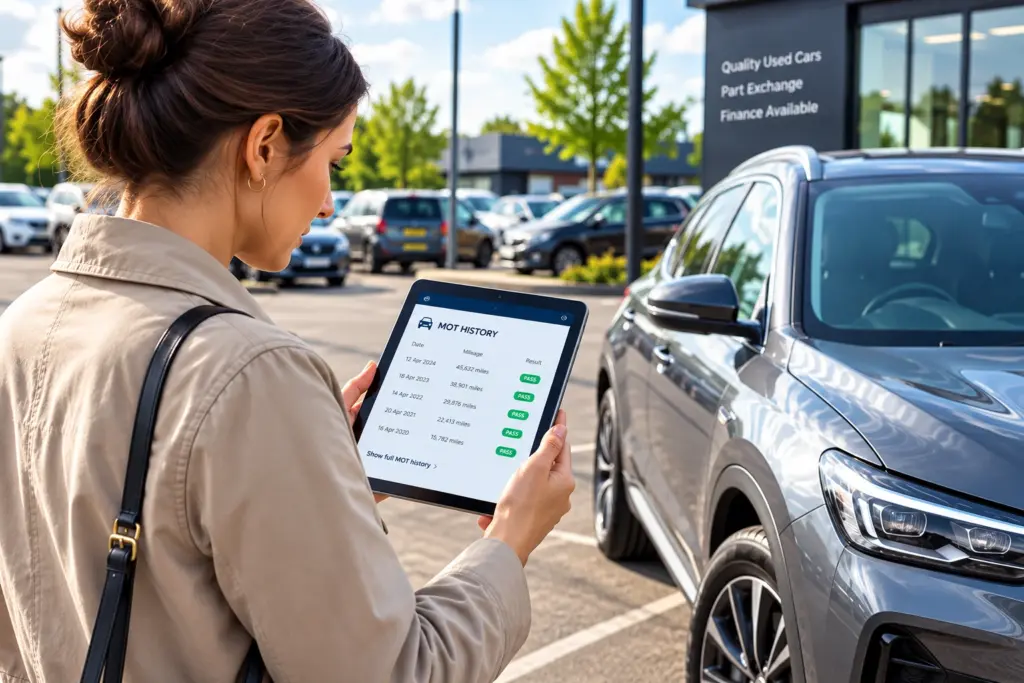
For most UK used cars, the official GOV.UK MOT history service is one of the best places to start when reviewing previous recorded mileage. It’s free and easy to use; just enter the vehicle registration number, and you’ll get:
- Previous MOT test results
- The mileage recorded at each test
- Test dates
- Pass and fail outcomes
- Relevant advisories and reasons for failures
The official GOV.UK MOT history service lets you view previous MOT results, including the mileage recorded when the vehicle was tested. You can also see test dates, whether the vehicle passed or failed, and relevant failures and advisories. For cars, motorcycles and vans tested in Great Britain, records are available for tests carried out since 2005. Northern Ireland runs its own system, with records from December 2017.
MOT mileage provides useful historical checkpoints, but it does not, by itself, prove that the current odometer reading is genuine. It should be compared with other available records to build a clearer picture of the vehicle’s history.
Compare the MOT Readings for Mileage Gaps
Once you’ve opened the MOT history, don’t just look at the latest figure. Work backward through the records and compare the mileage recorded at each test.
A normal pattern looks something like this:
- 2022 MOT: 42,100 miles
- 2023 MOT: 47,800 miles
- 2024 MOT: 53,600 miles
- 2025 MOT: 59,200 miles
This shows a broadly consistent upward progression.
On the other hand, you may find something that requires further investigation:
- Mileage decreases between two records.
- An unexpectedly large increase that doesn’t fit the vehicle’s use or other records.
- There is a long gap in the testing history.
- The current odometer reading is lower than an earlier documented reading.
- The mileage advertised by the seller doesn’t match the available records.
None of these situations should automatically be treated as proof that the vehicle has been deliberately altered. A mileage figure can sometimes be entered incorrectly, or records can contain other errors.
The important point is to notice the discrepancy and ask for an explanation rather than simply accepting the number shown on the dashboard.
Check the DVLA Vehicle Details
Next, check the vehicle information held by the DVLA.
The official DVLA vehicle enquiry service provides important vehicle details, including the date of first registration, year of manufacture, MOT expiry, tax and SORN status, engine size, fuel type, CO₂ emissions, last V5C issue date and export status. You only need the vehicle’s registration number to access this information.
Don’t confuse this information with a complete mileage history. The DVLA vehicle enquiry service helps confirm vehicle details, but mileage history should be reviewed using multiple sources such as MOT records, service records and other available documentation.
The DVLA vehicle enquiry service should be used alongside the MOT history rather than described as a complete mileage check. If a seller’s description doesn’t match what DVLA shows for the vehicle’s age or registration date, raise it before the MOT figures even come into play.
GOV.UK’s own guidance for buying a used car recommends checking the information supplied by the seller against DVLA records and checking the vehicle’s MOT history.
Check the Service and Maintenance History
Service and maintenance records can provide another useful layer of information and often fill gaps that MOT records leave out, since cars are typically serviced more often than tested. Look through any paperwork supplied with the vehicle and pay attention to mileage figures recorded on:
- Service invoices
- Garage receipts
- Maintenance records
- Tyre replacement records
- Repair invoices
- Previous MOT certificates
- Dealer service records
Dates are just as important as the mileage itself. For example, imagine the latest MOT records 62,000 miles, but a service invoice dated six months earlier records 71,000 miles. That difference should be investigated and explained before you decide whether to proceed with the purchase.
At the same time, don’t assume that every invoice or service record is automatically accurate. Check that the date, registration number or VIN, and garage or dealer details match across the documents.
The more independent records that agree, the easier it becomes to establish a consistent vehicle mileage history.
Use a Private Vehicle History Check
A private vehicle history check can provide another source of information when you’re buying a used car.
Citizens Advice recommends considering a private vehicle history check when buying used. The check may provide mileage information and flag discrepancies, as well as issues such as outstanding finance, theft, previous serious damage, and whether the vehicle has been written off.
This can be particularly useful when you want additional information that may not be available through basic free government checks.
However, treat a private history check as another source of evidence, not an absolute guarantee that the mileage displayed on the vehicle is genuine.
If you’re spending a significant amount on a used vehicle, combining several sources is generally more useful than relying on one report.
Check the Current Odometer Against the History
Once you have gathered everything, compare the number currently displayed on the vehicle with the information you’ve collected. Look at:
- Current dashboard mileage
- Latest MOT mileage
- Earlier MOT mileage
- Service mileage
- Repair and invoice mileage
- Private history-check mileage
- For finance vehicles, checking mileage history is also important because exceeding a PCP mileage allowance can lead to additional charges. See PCP excess mileage charges for more details.
You are looking for a history that makes sense as a whole.
For example, if the latest MOT records 78,000 miles and the dashboard currently shows 80,500 miles, the progression is obvious and understandable.
If the dashboard shows 65,000 miles while a service record from several months earlier shows 74,000 miles, ask the seller about the difference.
The closer the records align, the easier it is to establish a consistent mileage history.
What Does a Mileage Discrepancy Mean?
A mileage discrepancy does not automatically mean that someone has deliberately changed the vehicle’s mileage.
There are several possible explanations, including:
- An incorrect mileage entered during an MOT
- An administrative or recording error
- An error on a service record
- A replacement instrument cluster
- Other legitimate vehicle repairs
- Incorrect information supplied by a seller
- Possible deliberate mileage alteration
This is why it is important to consider the circumstances around a discrepancy before concluding.
Modern vehicles can store mileage-related information across different systems, and understanding where mileage data is stored besides the odometer can help explain why different records may sometimes show different figures. If the explanation doesn’t make sense or the available documentation doesn’t support it, treat that as a reason to investigate further rather than simply relying on the seller’s word.
Mileage History Check vs Mileage Correction: Understanding the Difference
A mileage history check, mileage correction, and mileage blocking refer to different concepts.
- Mileage History Check: Reviewing available records such as MOT history, service records, and vehicle information to understand whether the mileage timeline appears consistent.
- Mileage Correction: Changing an already recorded mileage value. Mileage correction and mileage blocking are often confused, but they serve different purposes. A mileage correction changes an existing recorded mileage figure, while a mileage blocker prevents additional mileage from being recorded while active. Understanding the difference between mileage correction and mileage blocking can help clarify how each process works.
- Mileage Blocking: Preventing additional mileage from being recorded while a device is active. It does not change mileage that has already been recorded. Understanding what a mileage blocker is and how it works helps explain why mileage blocking and mileage correction are not the same thing.
What If an MOT Mileage Entry Is Incorrect?
GOV.UK has an official process to fix an incorrect MOT mileage entry.
- If the MOT took place within the previous 28 days, the MOT centre that carried out the test can update the mileage after seeing the vehicle again.
- If the MOT was more than 28 days ago, you can report the mistake to DVSA online. You need evidence showing the correct mileage that should have been recorded, including an MOT invoice, emissions printout, service receipt, or vehicle job card. The evidence needs to show the correct mileage and be dated within one day of the MOT test.
How to Check Mileage Before Buying a Used Car
A mileage history check is easier when you review the available information in a structured way.
Before viewing the car
- Get the vehicle registration number.
- Check its MOT history.
- Review the recorded mileage at previous MOTs.
- Check the vehicle details held by DVLA.
- Ask the seller for service and maintenance records.
- Consider getting a private vehicle history check.
When viewing the vehicle
- Check the mileage shown on the dashboard.
- Compare it with the latest MOT reading.
- Look through service and repair documents.
- Check that the VIN on the vehicle matches the VIN on the V5C and any history/service documents.
- Ask about any unexplained mileage gaps or differences.
GOV.UK’s own used car guidance points buyers towards the same combination: vehicle details, MOT history, and documentation, all checked together before buying a used car.
Taking a few minutes to compare these records can reveal questions you might otherwise miss.
What Should You Do If the Mileage Doesn’t Match?
The right response depends on the size of the discrepancy and whether there is a reasonable explanation.
- If the discrepancy is small: Ask the seller to explain it and, where possible, provide supporting documentation.
- If there has been a documented repair: Check whether the discrepancy relates to an instrument-cluster replacement, relevant electronic-module replacement, or another documented repair affecting the recorded mileage.
- If a record appears to contain an error: Ask whether it can be corrected and request evidence supporting the correct mileage.
- If the seller cannot explain the difference: Don’t simply accept the advertised mileage. Take time to investigate the vehicle further.
- If you have serious concerns about deliberate mileage manipulation: Consider walking away from the purchase and obtaining independent professional advice. Citizens Advice recommends caution where the information supplied about a vehicle does not match the available records or where you are suspicious about the information provided by the seller.
Can You Check Mileage Without Paying?
Yes. You can carry out useful initial checks without paying for a private report.
The GOV.UK MOT history service is free and shows mileage recorded during previous MOT tests. The DVLA’s online vehicle enquiry service also provides important vehicle information.
However, a free MOT check is not the same thing as a complete vehicle history report.
For a used-car purchase, it’s worth aligning the free government information with service documentation and, where appropriate, a private vehicle history check. This gives you several reference points rather than relying on one record.
Mileage History Check: What to Remember
A proper mileage history check compares records, not just the number displayed on the dashboard.
Before buying a used car, remember to:
- Check the MOT history
- Compare the historical mileage readings
- Verify the vehicle details with DVLA
- Review service and repair records
- Consider a private vehicle history check
- Investigate unexplained discrepancies
- Don’t rely solely on the mileage stated by the seller
The goal is to establish whether the available records tell a consistent story. If something does not add up, investigate the reason behind the difference instead of relying on a single mileage figure.



Not sure which module fits your vehicle?
Use our vehicle finder or talk to our UK support team.