How to Tell If a Second-Hand Car Has Had a Mileage Blocker
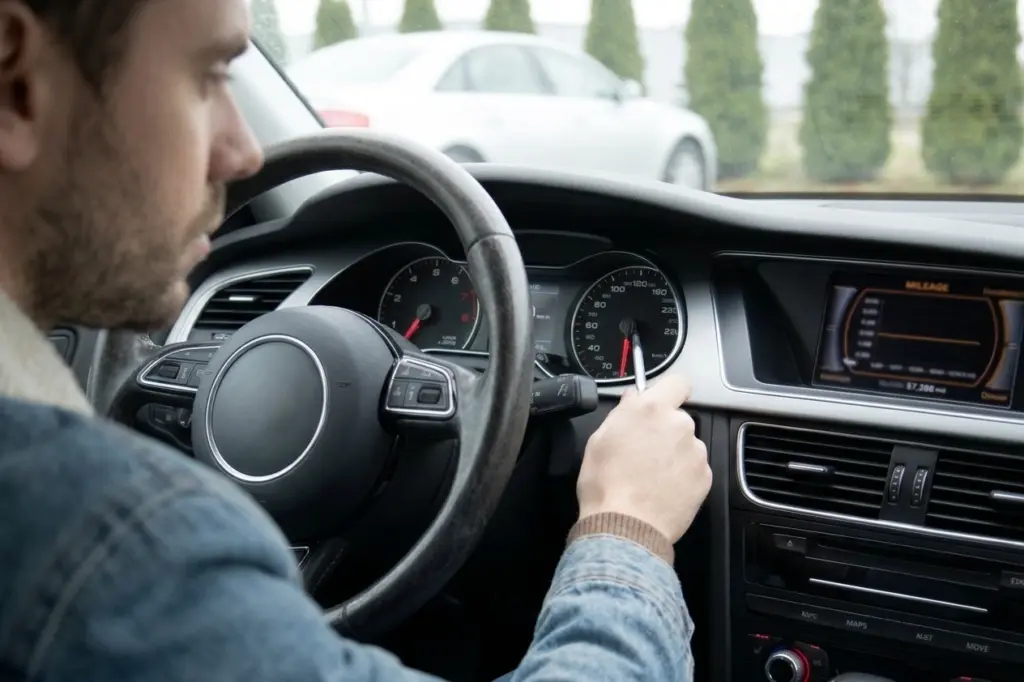
The clearest sign is an odometer or trip meter that doesn’t move during a test drive. Reset the trip meter before you set off, drive a few miles, and check the reading. If it still reads zero when you get back, the car might have a mileage blocker.
Other signs show up in the paperwork and the car itself, such as gaps in the service records, wear that doesn’t match the reading, and MOT mileage that climbs far more slowly than expected. No single sign proves anything, but if you find several, walk away or arrange a professional inspection before handing over any money.
This guide takes each check in turn, starting with the ones you can do for free on a viewing and moving towards the more technical ones. It also covers where each check falls short and your rights if you’ve already bought the car.
What Are the Signs of a Mileage Blocker in a Used Car?
When inspecting a second-hand car, look for these potential warning signs:
- An odometer or trip meter that doesn’t move on a drive
- Flat stretches in the MOT mileage history
- Service records that are missing or don’t add up
- Wear that doesn’t match the reading
- Signs that the dashboard has been disturbed
- Warning lights or fault codes
The sections below explain how to investigate each sign.
How Is a Mileage Blocker Different From Clocking?
Clocking edits the mileage already stored, so the car shows a lower figure than it has really covered. A mileage blocker is a device that stops new miles being recorded while it’s active, leaving the existing figure untouched.
That difference matters when you’re checking a car.
- Clocking often shows up as a drop between records, where a later reading is lower than an earlier one. For example, a service invoice records 82,000 miles, but a later MOT record shows 71,000 miles. That discrepancy needs investigating.
- A mileage blocker may be suspected when recorded mileage increases unusually slowly over an extended period, relative to the car’s apparent use.
Neither pattern identifies the cause by itself. Incorrect entries, instrument cluster replacements, and incomplete records can also create discrepancies.
How Do You Check the Odometer on a Test Drive?
Watching the mileage display during a test drive is the simplest check you can make.
- Record the starting mileage: Before you set off, photograph the odometer and reset a trip meter to zero
- Drive a normal route: Drive and use your phone’s navigation app to estimate the distance covered
- Compare the readings: Check whether the trip meter and odometer have increased as expected
A car’s odometer and a phone map won’t agree to the decimal point, but a trip meter that has barely moved after several miles is a problem. Some blockers slow the count rather than stopping it, so a trip meter that moves, but far less than your route, deserves the same suspicion.
A mechanic in Quebec came across one by accident during routine maintenance. He drove the car seven kilometres and found the trip meter still on zero, then traced the problem to a small device plugged into the car, as CTV News reported.
Check the odometer reading again when you collect the car. The reading should match your original photograph, plus the miles you’ve driven since.
Important: A normal test drive does not prove that the car’s historical mileage is genuine. It only shows how the display behaved during that journey.
Can an MOT History Check Show a Mileage Blocker?
Not directly, but MOT records can help you check the car’s mileage history. They show the mileage entered at each test, which can reveal a pattern.
How to Check MOT Mileage History
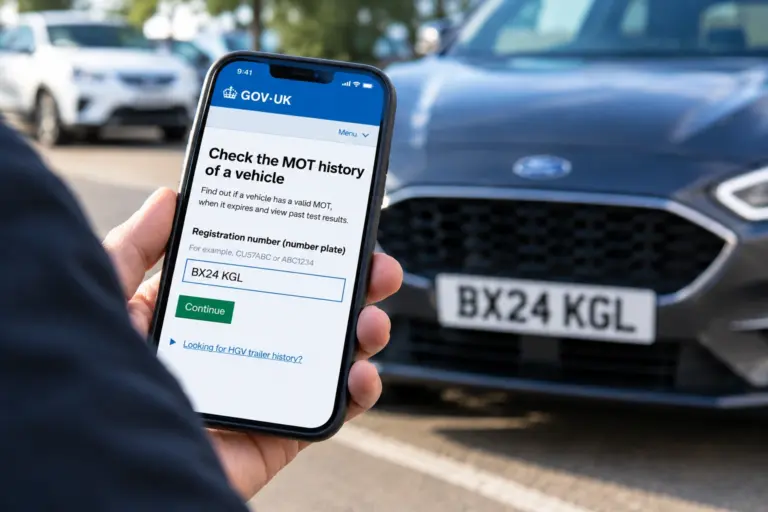
- Use the free GOV.UK Check MOT history service
- Enter the registration number
- Review the test dates and recorded mileage at each test. Look for years where the reading barely moves
- Note unusually small increases between tests and compare them with service invoices
- Ask the seller to explain any gaps or unexpected readings
It helps to have a benchmark. According to the Department for Transport’s National Travel Survey, the average car in England covered around 7,100 miles in 2024.
This is a general benchmark, not a minimum for every car. A car that has covered far less each year isn’t necessarily using a mileage blocker. Lower mileage can have perfectly reasonable explanations, such as retirement, access to another vehicle, or occasional local use. Ask the seller about the car’s usage and check whether their explanation fits the available records.
One limit to keep in mind: Cars don’t have MOT records for their first three years in Great Britain (four in Northern Ireland), so a gap at the start of the history is normal.
Can Service Records and Main Dealers Reveal the Real Mileage?
Service stamps and invoices, digital service histories, and repair records provide additional mileage readings to compare with the MOT history.
A franchised dealer may also hold the last mileage it recorded for the car. In one case, a person who bought a Toyota Aygo with an advertised mileage of 63,000 miles was told by the main dealership that the vehicle’s last recorded mileage was 100,759, according to the Hartlepool Mail. Magistrates later fined the seller, a sole trader. What a dealer can see depends on the brand, so pick up the phone and ask for mileage confirmation, the date, and where the reading came from.
If the seller can connect you with a previous owner, ask what the car’s mileage was when they sold it, then check whether it matches the pattern in the MOT and service records.
Does the Car’s Wear Match Its Mileage?
A car’s physical condition can help you assess whether the advertised mileage seems plausible. Concentrate on parts that receive regular contact from the driver.
- Steering wheel
- Gear knob
- Driver’s seat bolster
- Pedal rubbers
If a car has just 15,000 miles on the clock but a worn steering wheel, flattened pedal rubbers and a sagging seat edge, its condition may not match the claimed mileage.
New tyres or new brake discs and pads may warrant further investigation if the car’s recorded mileage is low. Ask the seller for a reasonable explanation and supporting invoices.
Wear is a reason to investigate, not proof of fraud. An independent inspection can help assess the vehicle’s condition before you buy.
Can You See a Mileage Blocker Behind the Dashboard?
You usually can’t see a mileage blocker without removing trim, but you may notice signs around the instrument cluster that the dashboard has been disturbed.
Look for signs such as:
- Unexplained pry marks around the instrument cluster
- Mismatched screws or trim that does not fit correctly
- Unfamiliar wiring or an electronic module visible under the dashboard
- Warning lights, unusual electrical behaviour, or communication fault messages
Don’t try to remove panels yourself. You could damage the trim or electronics, and you may not know what you’re looking at. If something looks off, walk away or book a vehicle diagnostic specialist to investigate further.
Can a Diagnostic Scanner Detect a Mileage Blocker?
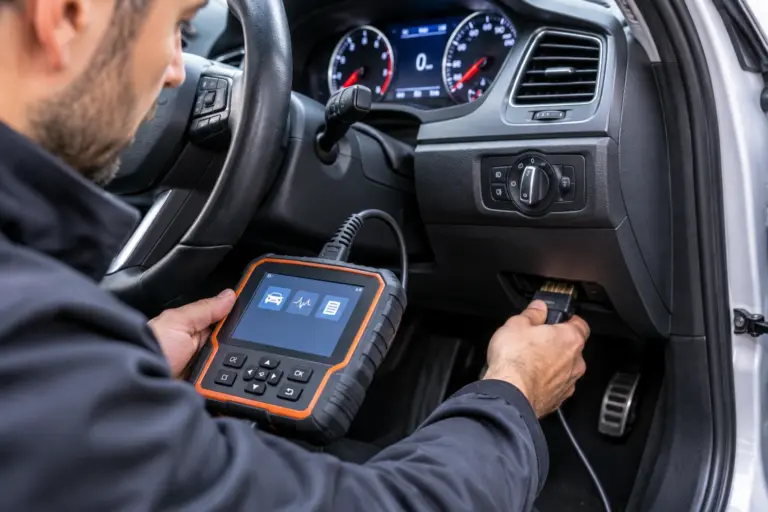
Sometimes. A specialist can read the car’s control units, including the ECU, to identify mileage inconsistencies or faults that are not visible on the dashboard.
A Wiltshire case shows what a diagnostic check can turn up. A Peugeot Boxer van was advertised and sold with 42,862 miles. After the sale, diagnostic checks at a Peugeot dealership put its real mileage at about 162,528, almost four times the advertised figure, according to Wiltshire Council. The seller was fined £999 and ordered to pay costs of £1,117.46 and a victim surcharge of £399. Reports don’t say how the reading came to be wrong, but the scan exposed it.
Some blockers stop mileage being recorded in every module that stores it, so a clean scan doesn’t rule one out. Combine diagnostics, MOT records, service invoices, and a paid vehicle history check before you reach a conclusion.
Is It Illegal to Sell a Car With a Mileage Blocker?
The legal position depends on the circumstances. The presence of a device does not establish that a seller has committed an offence. Misleading a buyer about a vehicle’s mileage is a different matter.
Traders are covered by consumer protection law. The Wiltshire dealer in the case above pleaded guilty to two offences under the Digital Markets, Competition and Consumers Act 2024 after selling a van with significantly inaccurate mileage.
Private sellers can also face misrepresentation claims if they provide false information about a car’s mileage. The legal route and evidence required depend on the circumstances of the sale.
The rules are set to change. On 20 October 2026, the government announced plans to add car clocking to the list of banned commercial practices under Schedule 20 of the Digital Markets, Competition and Consumers Act 2024. The change will apply to businesses selling cars to consumers. Car clocking is already illegal when it involves fraud, but the proposed change is intended to make enforcement easier. A commencement date has not yet been confirmed.
What Should You Do If You’ve Bought a Car With Blocked Mileage?
If you discover a possible mileage discrepancy after buying the car, preserve the evidence before deciding what to do next.
Keep copies of:
- The original advertisement and vehicle description
- The invoice, contract and payment records
- Messages or emails with the seller
- MOT records and service documents
- Any vehicle history check or independent inspection report
Your next steps depend partly on whether you bought the car from a trader or a private seller.
If You Bought From a Dealer
Contact the dealer in writing, explain the discrepancy, and state what you want them to do.
Under the Consumer Rights Act 2015, you may have a short-term right to reject the car if it was not as described. Section 22 generally gives you 30 days from delivery to use it. The buyer in the Wiltshire case above did exactly that.
You can also seek guidance from Citizens Advice (England and Wales) or Advice Direct Scotland.
If You Bought From a Private Seller
Private sales generally offer fewer protections than purchases from traders, but you may be able to claim against the seller if they misrepresented the mileage.
Keep a copy of the original advert and any messages stating the mileage or assuring you about the vehicle’s history. Your options will depend on what was represented, what you relied on, and the evidence available.
Where Can You Report Your Concerns?
- England and Wales: Contact the Citizens Advice consumer helpline on 0808 223 1133, which passes cases to Trading Standards.
Scotland: Contact Advice Direct Scotland on 0808 164 6000, which refers cases to Trading Standards. - Northern Ireland: Contact Consumerline.
Final Checks Before You Buy
Before committing to a second-hand car, run through this checklist:
- Check that the odometer and trip meter record distance during a test drive
- Review the available MOT mileage history
- Compare service invoices and dealer records with the advertised mileage
- Look for wear that seems inconsistent with the claimed use
- Ask the seller to explain discrepancies and provide supporting documents
- Arrange an independent inspection if significant questions remain
- Obtain a vehicle history check



Not sure which module fits your vehicle?
Use our vehicle finder or talk to our UK support team.