What is a Mileage Blocker and How Does It Work?
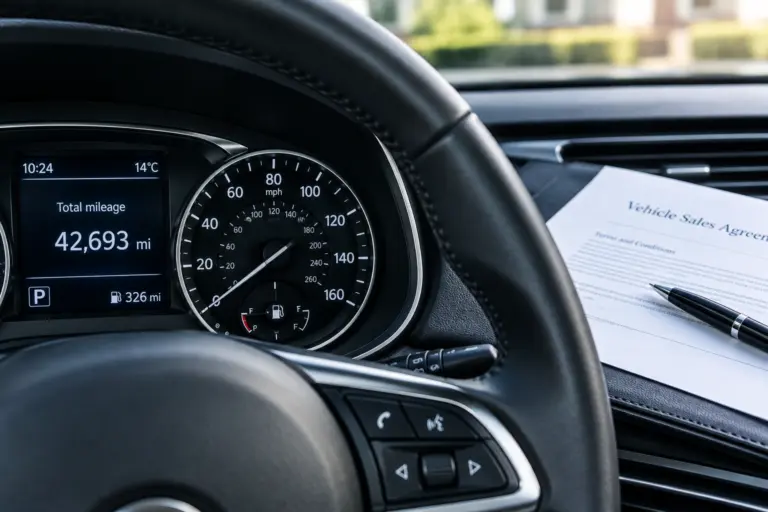
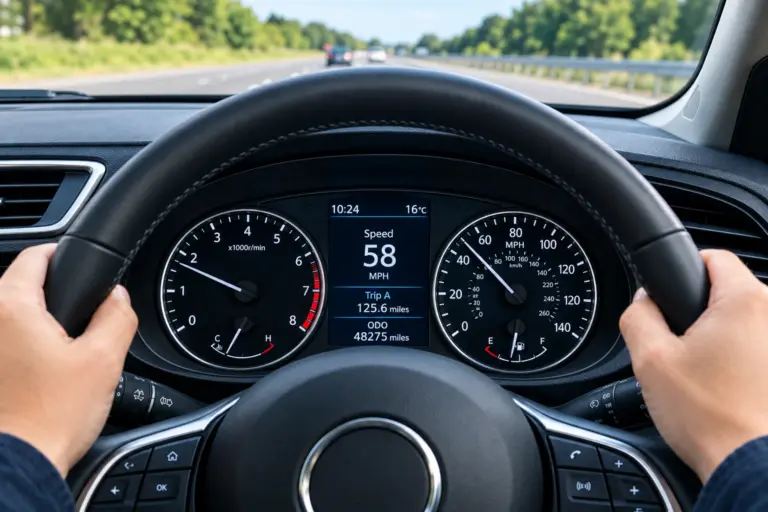
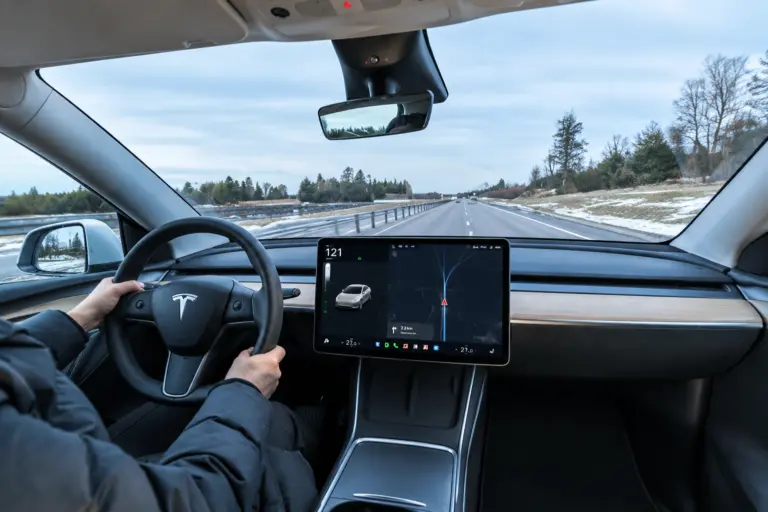
A mileage blocker is an electronic device designed to temporarily interrupt mileage recording in a compatible vehicle while it is...
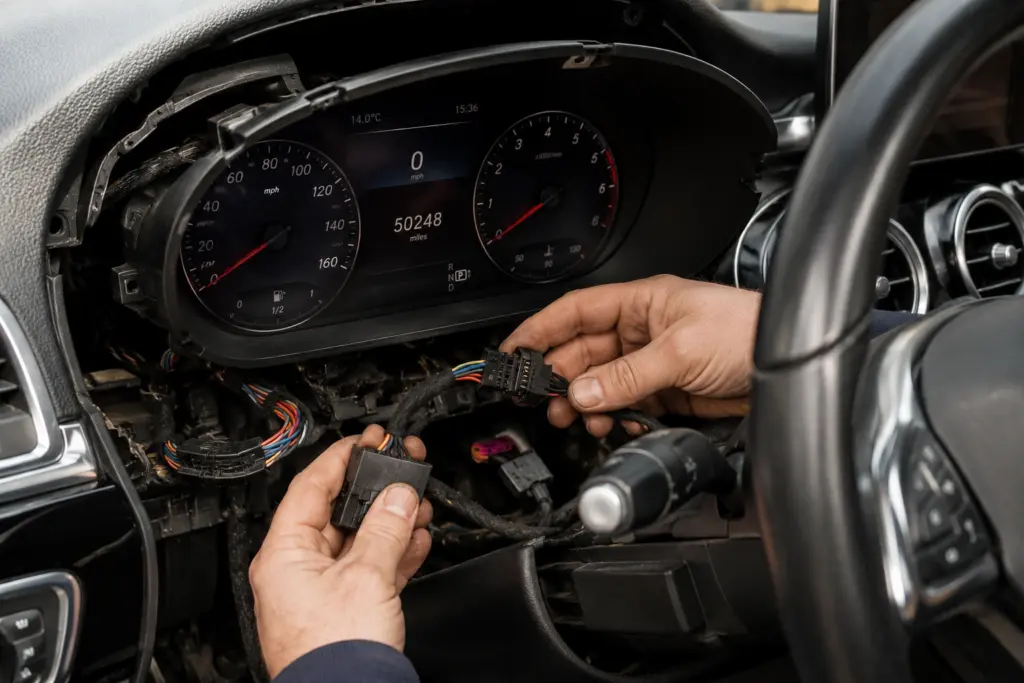
A mileage blocker is an electronic device designed to temporarily interrupt mileage recording in a compatible vehicle while it is active. It interacts with the vehicle’s electronic systems and, depending on the vehicle, may work through communication networks such as the CAN bus. It does not reduce the physical distance the vehicle has travelled.
This guide explains what a mileage blocker is, how it works at a technical level, how CAN bus technology relates to it, how it differs from mileage correction and odometer rollback, and what UK vehicle owners and buyers should know about mileage records and legal considerations.
What is a Mileage Blocker?
A mileage blocker is a device designed to interrupt mileage recording while it is active. It does not physically reduce the distance a vehicle has travelled, and it is different from a tool designed to rewrite an existing odometer reading.
Modern vehicles use electronic systems to collect, process and communicate information about vehicle operation. Depending on the vehicle, mileage-related information can involve sensors, electronic control units, communication networks and the instrument cluster.
A mileage blocker is designed to interact with this electronic environment so that the normal mileage-counting process is interrupted under the conditions for which the device was designed.
The terminology used in the automotive industry can vary. You may encounter terms such as:
- Mileage blocker
- Mileage stopper
- Mileage freezer
- Odometer blocker
- Odometer stopper
- CAN bus blocker
- Mileage blocking device
These terms are often used to describe similar concepts, but individual devices can differ in their technology, compatibility, and intended applications.
What Does a Mileage Blocker Actually Do?
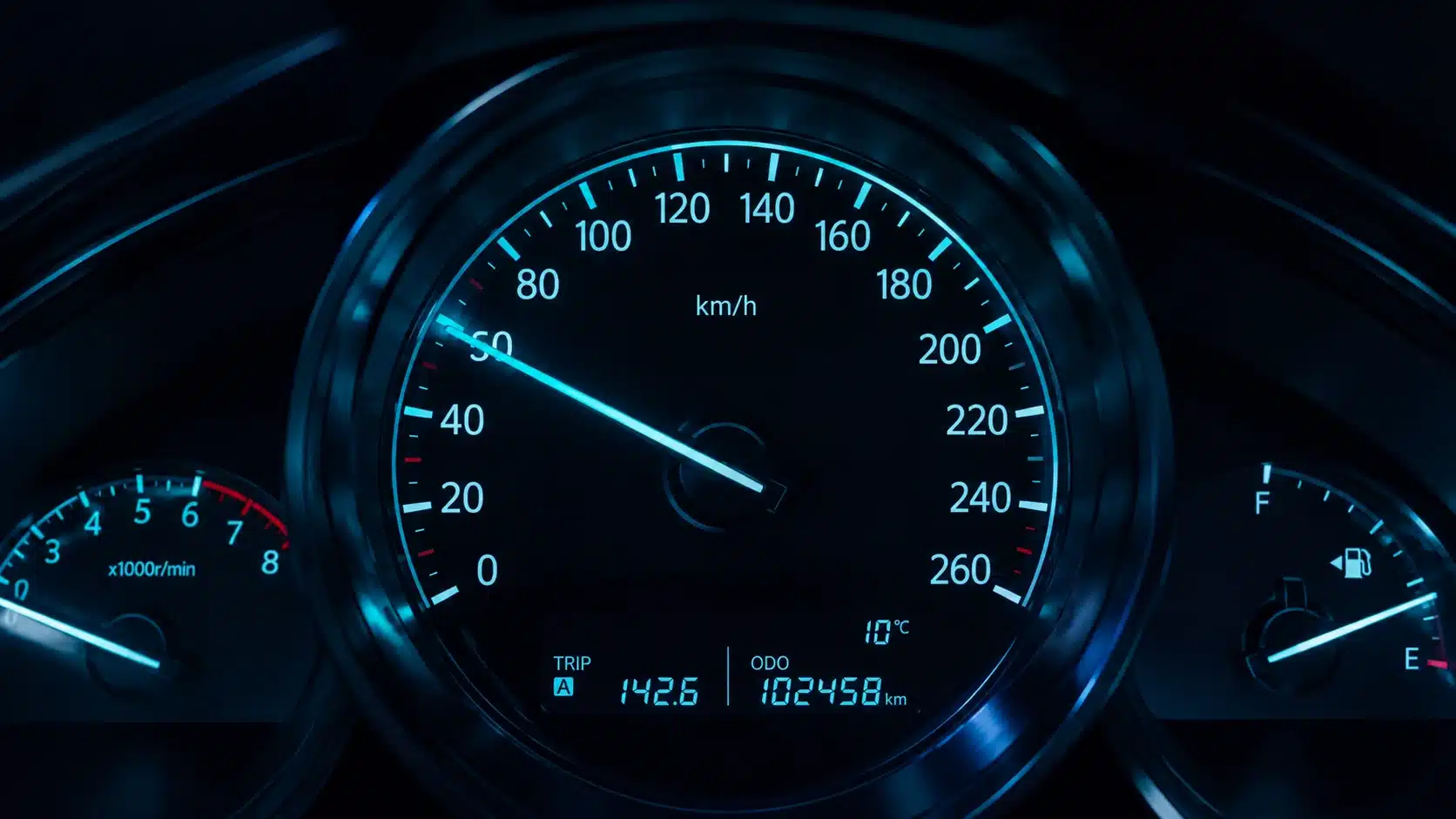
At a high level, a mileage blocker prevents certain mileage-related information from being processed in the normal way while the device is active.
It is important not to confuse this with changing an existing mileage reading.
A mileage blocker does not simply turn an odometer backwards. Instead, its purpose is generally to interrupt the accumulation of mileage during the period in which it is active.
For example, if a vehicle displays 50,000 miles before a mileage-blocking device is activated, the displayed mileage may remain around that figure while the device is operating in a compatible application.
The vehicle is still physically travelling. The device affects the recording process, not the distance the vehicle actually covers.
Displayed mileage ≠ physical distance travelled
This distinction is important when discussing mileage-blocking technology because a vehicle’s odometer reading represents recorded mileage, while the vehicle itself continues to cover physical distance.
How Does a Mileage Blocker Work?
Understanding the basic technology behind a mileage blocker starts with understanding how a modern vehicle records and communicates information. A simplified representation is:
Sensors and vehicle systems → Electronic Control Units → Vehicle communication network → Instrument cluster/mileage display
The real architecture varies between manufacturers and models and can be considerably more complex.
A mileage blocker is designed to interact with this electronic communication process so that relevant mileage information does not result in the normal mileage update while the device is active.
How is Vehicle Mileage Normally Recorded?
When a vehicle moves, its electronic systems receive information associated with vehicle speed and movement. Depending on the vehicle, this information can be generated, processed, or shared by different components.
The vehicle’s electronic systems use these signals as part of determining distance travelled. The resulting information can then be used to update the odometer.
In older vehicles, mileage recording could rely heavily on mechanical systems. Modern vehicles generally use digital electronics and communication networks, which means mileage-related information can move between multiple components.
This is why understanding a vehicle’s electronic architecture is important when discussing mileage blockers.
What is CAN Bus?
CAN bus, short for Controller Area Network, is a communication network widely used in modern vehicles. It allows different electronic control units and vehicle systems to exchange information without requiring a separate direct connection between every component.
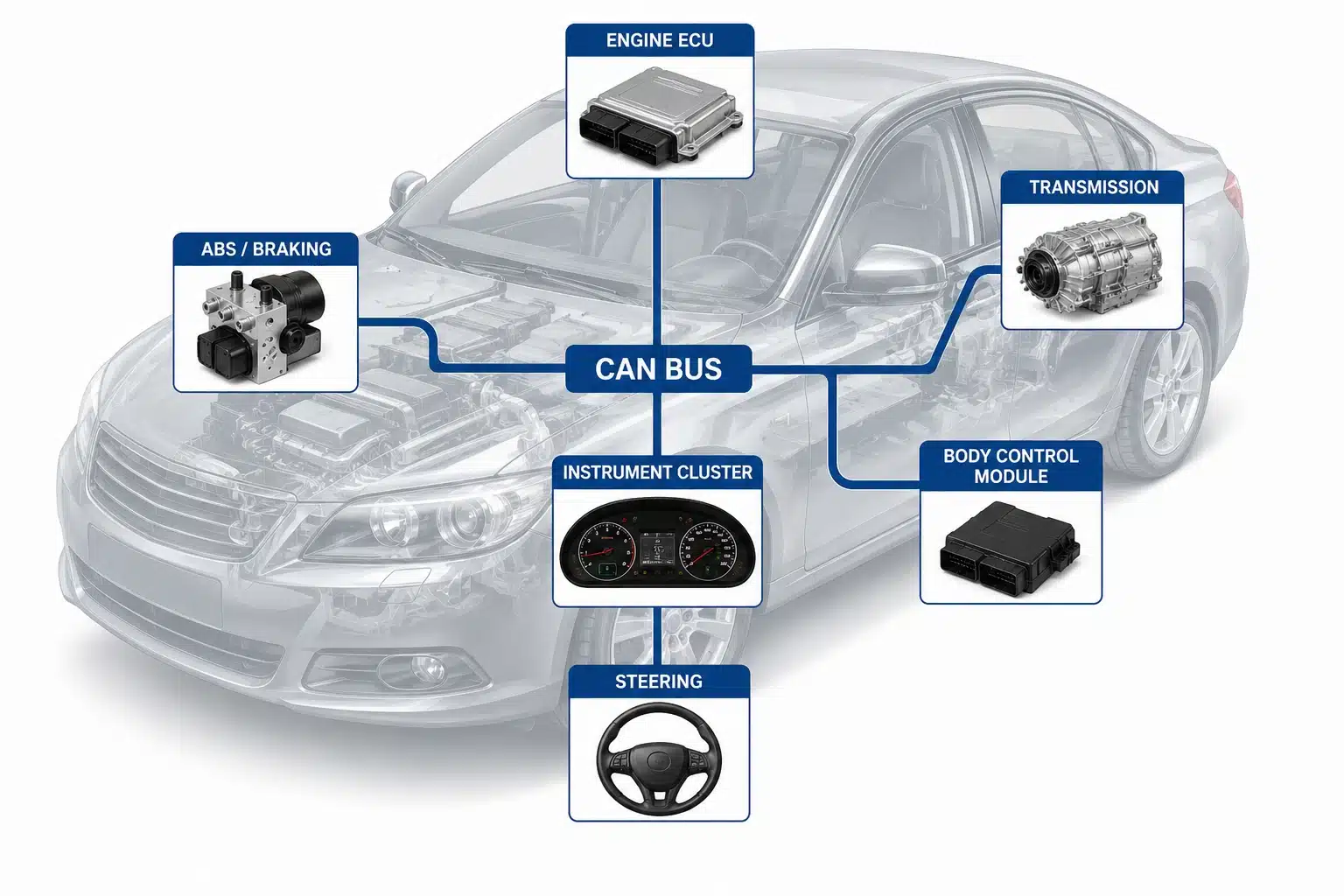
Depending on the vehicle, CAN communication can carry information related to systems like engine operation, vehicle speed, transmission, braking, steering, instrumentation, safety systems, and diagnostics, etc. The exact implementation varies by manufacturer and vehicle.
Why is CAN Bus Relevant to Mileage Blockers?
Mileage-related information in a modern vehicle can be communicated electronically between different modules.
A compatible mileage blocker may interact with this communication environment to prevent particular mileage-related information from being processed in the normal way.
However, it would be misleading to say that every mileage blocker simply “cuts the CAN bus.”
Modern vehicle networks are sophisticated, and different products can use different approaches depending on the vehicle’s electronic architecture.
What Happens When a Mileage Blocker is Active?
When a compatible mileage blocker is operating, the objective is generally to prevent the vehicle’s normal mileage-counting process from updating. The visible result can be that the odometer does not increase in the usual way while the device is active. For example:
- Before activation: 50,000 miles
- Vehicle travels: Additional distance
- While blocking: Displayed mileage may remain unchanged
- After normal operation resumes: Mileage recording can continue according to the vehicle’s normal behaviour
The exact behaviour depends on the vehicle and device. The important distinction is:
The vehicle continues to travel, but mileage recording may be interrupted while the blocker is active.
What Vehicle Components Are Involved?
A mileage-blocking system is part of a wider electronic environment. Understanding the major components makes the technology easier to understand.
Instrument Cluster
The instrument cluster is the dashboard assembly that presents information to the driver. It can contain displays for speed, engine information, fuel level, warning lights, trip information, and odometer mileage.
In modern vehicles, the cluster is an electronic component rather than simply a mechanical counter.
Electronic Control Units
An ECU, or Electronic Control Unit, is an electronic module responsible for controlling or processing particular vehicle functions. A modern vehicle can contain numerous control units rather than one single computer.
Different modules handle areas such as engine management, transmission, body electronics, braking, steering, and safety systems. These modules can communicate through vehicle networks such as CAN.
Vehicle Sensors
Vehicles use a range of sensors to monitor operating conditions. Depending on the vehicle, information related to speed and movement can be generated or processed by electronic systems before being communicated to other modules.
The exact sensor configuration differs between vehicle manufacturers and models.
Is Mileage Stored in More Than One Place?
One of the biggest misconceptions about modern vehicle mileage is that the number shown on the dashboard is necessarily the only mileage-related information in the vehicle.
Modern vehicles can contain multiple electronic modules, and depending on the manufacturer and architecture, usage-related information may exist in different systems. Potentially relevant components can include:
- Instrument cluster
- Engine control unit
- Transmission control unit
- Body control modules
- Other electronic control units
- Diagnostic systems
The exact information stored and how it is accessed varies significantly between vehicles. This is important when investigating mileage discrepancies because the displayed odometer reading may not provide the complete picture by itself.
Mileage Blocker vs Mileage Correction vs Odometer Rollback
These terms are frequently confused, but they describe different concepts. Understanding the difference between mileage blockers and mileage correction is important because they affect vehicle mileage in completely different ways.
Mileage Correction
Mileage correction generally refers to changing an existing mileage value to reflect the vehicle’s genuine mileage.
There can be legitimate reasons for correcting a mileage record. For example, an instrument cluster may be replaced, and the vehicle’s correct mileage may need to be represented accurately.
The key issue is whether the resulting mileage is accurate, properly documented, and honestly represented.
Odometer Rollback and Clocking
Odometer rollback, commonly referred to as clocking, involves deliberately reducing or otherwise misrepresenting the displayed mileage so that a vehicle appears to have travelled less than it actually has.
The UK Competition and Markets Authority specifically identifies false mileage information as potentially misleading when it can influence a consumer’s decision to purchase a second-hand vehicle. Its current guidance provides an example involving a vehicle whose genuine mileage has been reduced on the odometer.
Think of the three concepts this way:
- Mileage blocker: interrupts mileage recording while active.
- Mileage correction: adjusts an existing mileage value to restore or represent accurate mileage.
- Clocking: deliberately misrepresents mileage, typically to make a vehicle appear less used.
The technology and circumstances matter, but accuracy and transparency are the key principles when a vehicle is being sold or represented to another party.
Why Are Mileage Blockers Used?
Mileage blockers can be used in practical situations where a vehicle needs to be operated, moved or tested without normal road mileage being the purpose of the activity. Depending on the vehicle and application, this can include workshop work, dyno sessions, private-track use, off-road operation and other controlled environments.
To Control Mileage Recording on Your Vehicle
You may want to control mileage recording on your own vehicle when the car is being used. A mileage blocker can manage how new mileage is recorded while the module is active. The module does not change mileage that has already been stored, and it should not be used to conceal the vehicle’s actual history.
Workshop and Service Work
A vehicle may need to be run, moved or tested while technicians carry out repairs, diagnostics, calibration or other workshop procedures. In these situations, the vehicle is being operated as part of the work being performed rather than for normal travel.
Dyno and Performance Sessions
During dyno or rolling-road sessions, the drivetrain and wheels can operate while technicians assess power delivery, torque, calibration, or vehicle behaviour. Mileage blocking can form part of this controlled setup where road mileage is not the purpose of the session.
Private Track and Motorsport Use
Vehicles used on private tracks may cover significant distance during setup, performance testing or motorsport activities without travelling on public roads. This is another practical setting where mileage-blocking technology may be used.
Off-Road and Private-Site Use
Some vehicles operate on private land, specialist facilities or other off-road environments. This can include vehicles being used for testing, demonstrations or specialist activities away from normal public-road journeys.
Vehicle Preparation and Specialist Automotive Work
Specialist automotive businesses may need to operate a vehicle during modification, electrical work, calibration or preparation before it is returned to the customer. The exact use depends on the vehicle and the work being carried out.
Are Mileage Blockers Legal in the UK?
There isn’t a useful one-word answer that applies to every situation involving a mileage blocker. This is how the technology is used and whether the vehicle’s mileage is subsequently represented accurately.
Mileage-blocking technology can be associated with controlled automotive applications such as vehicle testing, diagnostics, dyno testing and track use. However, using technology to deliberately conceal mileage and then presenting an inaccurate figure as the vehicle’s genuine mileage is a different matter.
UK consumer-protection law is particularly relevant when inaccurate mileage information is provided to consumers.
The Competition and Markets Authority identifies genuine vehicle mileage as information that can be material to a consumer’s decision when purchasing a second-hand car. Its current guidance gives examples of false mileage information and clocking as potentially misleading commercial practices under the Digital Markets, Competition and Consumers Act 2024 (DMCC Act).
The CMA’s guidance explains that false mileage can influence whether a consumer buys a vehicle or how much they are willing to pay, making genuine mileage potentially material information.
There is also a documented history of UK enforcement involving businesses offering mileage correction services. A former Office of Fair Trading review recorded enforcement against a mileage-correction provider whose conduct included inaccurate odometer adjustment and offences under consumer-protection legislation and the Fraud Act 2006.
The practical distinction is therefore important:
The existence of mileage-blocking technology is not the same thing as deliberately misrepresenting a vehicle’s mileage. The legal and consumer-protection concerns arise particularly when inaccurate mileage is used or presented deceptively.
What should vehicle owners keep in mind?
A mileage blocker should not be used to:
- Make a vehicle appear to have travelled fewer miles than it actually has
- Increase a vehicle’s perceived value through false mileage
- Mislead a buyer
- Conceal vehicle use when accurate mileage is required
- Falsify service history
- Misrepresent mileage to a finance or leasing company
- Provide inaccurate mileage information in commercial documentation
If a vehicle has been used in a situation where mileage recording was intentionally interrupted, keeping accurate records of the vehicle’s actual use can help prevent confusion later.
For a specific legal situation, obtain advice from an appropriately qualified UK legal professional.
Mileage Blockers and MOT History
For UK vehicle owners and buyers, MOT history is one of the most useful sources of historical mileage information.
The official GOV.UK MOT history service provides previous test results and the mileage recorded at each test. For cars, motorcycles and vans tested in Great Britain, records are available from 2005 onwards. Northern Ireland operates a separate MOT system, with records available from 2017 onwards.
You can check a vehicle’s MOT history using its registration number. The service shows previous MOT results and the mileage recorded at each test. This provides a series of historical mileage checkpoints that can be compared with the vehicle’s current odometer reading and other records.
Mileage Should Normally Increase Between MOT Tests
One of the simplest rules when reviewing MOT history is: A vehicle’s recorded mileage should normally increase over time, not decrease. For example:
- 2022 MOT: 48,500 miles
- 2023 MOT: 55,200 miles
- 2024 MOT: 62,100 miles
- 2025 MOT: 69,400 miles
This shows a consistent upward progression. By contrast, this creates a clear discrepancy.
- 2022 MOT: 82,000 miles
- 2023 MOT: 86,500 miles
- 2024 MOT: 61,000 miles
A lower mileage entry does not automatically prove that a mileage blocker was used. It could result from an incorrect MOT entry or another circumstance. However, it is a strong reason to investigate the vehicle’s mileage history further.
The DVSA has also acknowledged that mileage-entry errors occur during MOT testing and has published guidance on correcting incorrect mileage readings in the MOT Testing Service.
Can MOT History Prove a Vehicle’s True Mileage?
Not by itself. MOT history provides important historical checkpoints, but a complete mileage assessment can also involve:
- Service invoices
- Maintenance records
- Repair documentation
- Previous inspection reports
- Diagnostic information
- Vehicle history records
- Other dated mileage records
The more independent records that support the same mileage progression, the stronger the overall picture becomes.
If an MOT record contains a genuine error, GOV.UK provides a process for correcting certain MOT certificate mistakes. Supporting evidence may be required to establish the correct information.
Can a Mileage Blocker Be Detected?
A mileage discrepancy can often be identified by comparing the vehicle’s current mileage with historical records. Determining why a discrepancy exists, however, can require additional investigation.
There isn’t one universal diagnostic test that can identify a mileage blocker on every vehicle. Vehicle architecture, electronic modules, stored information, and available diagnostic equipment vary between manufacturers and models.
For that reason, mileage investigation is generally about comparing multiple sources of evidence rather than relying on the dashboard alone.
MOT History
MOT records provide valuable historical mileage checkpoints. A mileage entry that decreases compared with a previous test should be investigated because mileage would normally be expected to progress upwards over time.
However, an unusual MOT reading does not by itself establish that a mileage blocker was used.
Service and Maintenance Records
Service invoices and maintenance records can provide additional dated mileage readings. Such as:
- 2023 service: 54,200 miles
- 2024 MOT: 61,500 miles
- 2024 service: 63,100 miles
- Current odometer: 68,400 miles
A sequence like this can help establish a consistent history. Conversely, a significant unexplained difference between records warrants further investigation.
Diagnostic Information
Depending on the vehicle, relevant information may be available from different electronic modules. Specialist diagnostic equipment can sometimes provide additional information that can be compared with the instrument cluster and documented history.
The amount and type of information available varies significantly by manufacturer, model, and model year.
Vehicle Condition
Physical condition can provide supporting context. Areas such as steering wheel, driver’s seat, pedals, gear selector, door controls, brakes, and tires may be examined. However, physical wear cannot establish mileage on its own.
Driving conditions, vehicle type, maintenance, and previous use can all affect how quickly different components wear.
Historical Inconsistencies
In many cases, the most useful evidence is an unexplained inconsistency between independent records.
- Current dashboard: 55,000 miles
- Service record: 73,000 miles
- Previous MOT: 69,000 miles
That does not automatically identify the cause of the discrepancy. It does, however, show that the claimed mileage does not align with the available historical evidence and should be investigated.
The important takeaway is that detecting a mileage discrepancy and proving exactly how it occurred are two different questions.
Why Accurate Mileage Matters
Mileage can affect much more than a number on the dashboard and can influence:
- Vehicle value
- Maintenance intervals
- Warranty considerations
- Finance and leasing arrangements
- Insurance considerations
- Buyer decisions
- Resale value
A vehicle with 120,000 genuine miles is not equivalent to a comparable vehicle with 60,000 genuine miles. This is why accurate mileage information matters to both buyers and sellers.
The CMA’s guidance specifically recognises genuine vehicle mileage as information that can be material to a consumer’s decision when purchasing a second-hand vehicle.
Common Misconceptions About Mileage Blockers
“A mileage blocker turns the odometer backward.”
Not necessarily, as a mileage blocker is designed to interrupt mileage recording while active. This is different from deliberately rewriting an existing odometer value.
“A mileage blocker deletes the vehicle’s entire history.”
Modern vehicles can contain multiple electronic systems, and information may be distributed between modules depending on the vehicle architecture. So, that is an oversimplification.
“Every mileage blocker works on every car.”
No, because vehicle electronics vary significantly between makes, models, and model years. Compatibility is therefore vehicle-specific.
“Mileage blockers are only used for fraud.”
No. The technology can undergo controlled testing and be used in specialist applications. The problem arises when inaccurate mileage is deliberately used to deceive another party.
“The dashboard is the only place mileage information exists.”
This is not necessarily true as modern vehicles can contain multiple electronic control units and systems that may retain different types of vehicle information.
“An unusual MOT mileage proves a mileage blocker was installed.”
No. A mileage discrepancy is evidence that something needs investigating. It does not, by itself, identify the cause.
Do Mileage Blockers Work on Every Car?
No. Compatibility depends on the vehicle’s make, model, model year, and electronic architecture. Different vehicles use different electronic architectures and communication systems, so a device designed for one vehicle may not be suitable for another.
This is why selecting the correct mileage blocker requires checking your vehicle’s exact details rather than relying only on the manufacturer or model name.
Can a Mileage Blocker Permanently Change Mileage?
A mileage blocker is fundamentally different from a tool designed to rewrite an existing odometer value. Its primary function is to interrupt mileage recording while active rather than reduce a previously recorded mileage value.
Can Mileage Information Exist in Multiple Vehicle Modules?
It can. Modern vehicles contain multiple electronic control units and systems, and the type of mileage or usage information available in those systems varies by manufacturer and model. This is why investigating a mileage discrepancy may involve looking beyond the instrument cluster.
Key Takeaways
A mileage blocker is an electronic device designed to interrupt normal mileage recording in a compatible vehicle while it is active.
The technology is connected to modern vehicle electronics and, in many applications, the communication networks that allow different vehicle modules to exchange information.
The most important points are:
- A mileage blocker interrupts mileage recording while active.
- It does not physically reduce the distance a vehicle travels.
- It is different from mileage correction.
- It is also different from odometer rollback or clocking.
- CAN bus technology is relevant to many modern vehicle electronic systems.
- Vehicle architecture differs significantly between makes and models.
- Mileage-related information may exist across multiple electronic systems.
- Mileage-blocking technology can have controlled testing and specialist applications.
- Controlled use is different from deliberately misrepresenting vehicle mileage.
- MOT history is an important source of historical mileage information in the UK.
- Mileage should normally progress upwards between MOT tests.
- A decreasing MOT mileage entry should be investigated but does not automatically prove a mileage blocker was used.
- Service records, diagnostic information and vehicle condition can provide additional context.
- Deliberately providing false mileage information can create serious consumer-protection and legal consequences.
Ultimately, understanding a mileage blocker requires looking beyond the dashboard number. Modern vehicles are interconnected electronic systems, and mileage is part of a wider network of information.
For anyone researching the technology, the best starting point is to understand what a mileage blocker does, how vehicle mileage is recorded, how CAN bus technology fits into the process, how mileage discrepancies can be investigated, and why accurate mileage disclosure matters in the UK.



Not sure which module fits your vehicle?
Use our vehicle finder or talk to our UK support team.