Can a Leasing Company Detect If You Use a Mileage Blocker?

Yes, a leasing company can detect mileage-blocker use. A discrepancy doesn’t prove wrongdoing, but it can raise questions about the car’s recorded mileage.
The bigger issue is what happens if you deliberately understate the mileage to avoid excess mileage charges. Under a personal or business contract hire agreement, the finance company owns the vehicle. Misrepresenting its mileage can amount to fraud under the Fraud Act 2006 and may also breach your agreement. That’s why Smelecom does not supply modules for leased, financed, or for-sale vehicles.
If you’re on a lease and watching the odometer climb faster than planned, there are legal ways to manage excess mileage, and none of them involve risking a criminal record. This guide covers how leasing companies check mileage, where you stand legally, and what you can do if you’re likely to go over your allowance.
Can a Leasing Company Tell If You’ve Used a Mileage Blocker?
Yes. They don’t need anything unusual to do it. Leasing companies compare records, including MOT tests, servicing records, and the reading taken when the vehicle is collected.
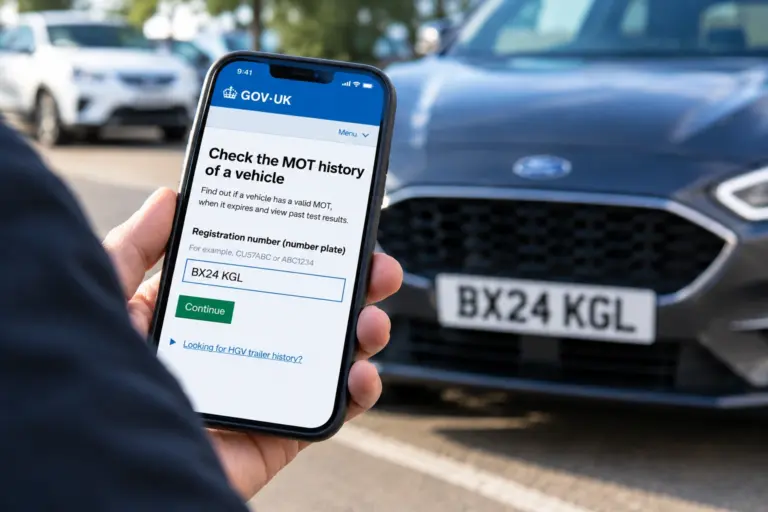
If the car is old enough to have had an MOT, anyone, including your leasing company, can check its recorded mileage through the GOV.UK Check MOT History service. It covers MOT tests carried out in England, Scotland and Wales since 2005. Most lease cars are handed back before their first MOT at three years old, so for newer cars, servicing records and the handback reading do most of the work.
The readings noted at the end of a lease can be compared with previous records, and unexplained differences can raise further questions.
Not every discrepancy means a car mileage blocker has been used. Incorrect entries and recording errors can also affect the figures.
Detection isn’t certain in every case. Even so, deliberately giving a misleading mileage reading to avoid a contractual charge can have financial and legal consequences.
Who Owns a Leased Car, and Why It Matters
Under personal contract hire (PCH), the finance company owns the vehicle. You’re not buying the car. You’re paying to use it for an agreed term and an agreed mileage, then you hand it back.
That’s different from a PCP, where you usually have the option to buy the car at the end. On a lease, there’s no such step. The car goes back, and the finance company sells it on or re-leases it. The odometer reading at handback affects the vehicle’s resale value, which is why the mileage allowance matters so much in the contract.
The allowance is usually set as an annual figure and applies across the whole term. You’re charged a pence-per-mile rate specified in the contract for every mile over it.
Most lease agreements restrict modifications to the car, so check your contract before making any changes.
Is It Illegal to Use a Mileage Blocker on a Leased Car?
Returning a car while deliberately understating mileage to avoid charges is a false representation. That can be an offence under section 2 of the Fraud Act 2006 (in Scotland, the common-law offence of fraud applies).
Section 2 applies where someone dishonestly makes a false representation, knows it is or might be untrue or misleading, and intends to make a gain for themselves or another person, or to cause loss to another or expose them to a risk of loss.
Simply owning a device isn’t automatically an offence. Dishonestly misrepresenting the mileage can be, and so can having a device for use in a fraud, under section 6 of the same Act.
There may also be contractual consequences. Depending on the agreement and circumstances, these can include:
- Recovery of excess mileage charges: The leasing company may recover any unpaid amounts.
- Breach of contract: Intentionally misrepresenting the mileage or making unauthorised changes may breach the agreement.
- Termination of the agreement: The finance company may have the right to terminate the agreement.
- Civil proceedings or a criminal referral: The leasing company may bring civil proceedings or refer suspected fraud to the relevant authorities.
These are possible outcomes, not automatic consequences in every case. The contractual terms, available evidence, amount involved, and surrounding circumstances all matter.
Keep in mind: a mileage allowance is a contractual limit, not a figure to be concealed. If you exceed it, deal with the charge through the options available under your agreement rather than submitting a misleading reading.
What Normally Happens When You Return a Lease Car
When a lease ends, the vehicle is collected, and the leasing company or its appointed inspection provider assesses the car against the relevant return standards and the terms of the agreement.
The handback process generally involves:
- Vehicle collection: The car is handed back in accordance with the leasing company’s arrangements.
- Mileage recording: The odometer reading is recorded for the return.
- Condition assessment: The vehicle is assessed against the applicable return standards, such as the BVRLA Fair Wear and Tear Guide.
- Charge calculation: If the recorded mileage exceeds the agreed allowance, the leasing company calculates any excess mileage charge in line with the contract.
- Final account: Any applicable charges are communicated to the customer for settlement.
If you have driven beyond your allowance, expect an excess mileage invoice. You can work out the likely amount beforehand, which makes it easier to budget and discuss your options with the provider.
Going Over Your Mileage Allowance? Your Legitimate Options
If you’re on course to exceed your allowance, you have more choices than it might seem. The earlier you act, the more options you’ll have.
Contact the Leasing Company Early
Explain that your driving needs have changed and ask whether the company can increase your mileage allowance for the remainder of the agreement.
Some leasing firms let customers modify their allowance based on new requirements. It may be more cost-effective to change the allowance than to pay an excess mileage charge when the contract ends, but it’s best to check rather than assume.
Ask the provider to confirm in writing the revised allowance, any change to your monthly payment, and how the final excess charge will be calculated.
Work Out What the Bill Would Actually Be
Find the excess rate in your agreement and multiply it by your projected excess mileage.
If your agreement charges 8p a mile and you finish 3,000 miles over, the charge would be:
3,000 miles × £0.08 = £240 (plus VAT if your rate is quoted excluding VAT)
Having the real figure gives you something concrete to compare against the cost of raising your allowance.
Ask About Early Termination or Handback Terms
If your circumstances have changed, such as a new job further away or a growing family, ask what your options are and what each would cost. Get the figures in writing so you can compare them properly. It’s better to hear them now than at collection.
Keep Your Mileage in Check for the Rest of the Term
If you have time left on the lease, review your usual driving and identify where you can reduce unnecessary journeys.
Divide your total allowance by the number of months in the agreement and compare it with your odometer reading every month or so. If you’re running ahead, small changes like combining errands or using public transport occasionally can keep you within the mileage allowance.
Contact the Financial Ombudsman Service If Necessary
If you have a complaint about a regulated consumer hire agreement, the Financial Ombudsman Service can help. Raise the complaint with the leasing company first. The firm normally has 8 weeks to send a final response. If it doesn’t, or you’re unhappy with the response, you can go to the Ombudsman, usually within 6 months of the final response.
The service will not automatically remove a charge simply because it is expensive. Your complaint needs to explain what you believe went wrong and be supported by relevant documents, such as your agreement, mileage records, invoices, and correspondence.
Already Fitted One to a Leased Car?
Don’t make the situation worse by continuing to misrepresent the mileage.
Take these steps:
- Stop using the device.
- Contact the leasing company before returning the vehicle and be truthful about the mileage.
- If you are concerned about the possible legal or contractual consequences, speak to a solicitor who can advise you on your options. Citizens Advice is also a useful starting point for understanding where you stand and finding the right support.
Being upfront does not guarantee that the leasing company will waive charges or take no further action. It does allow you to address the issue without continuing to make misleading representations.
Where Smelecom Stands
Smelecom’s modules are not for leased, financed, or for-sale vehicles. The modules are intended for lawful professional applications, including vehicle testing, workshop diagnostics, and vehicle development. You must not use them to misrepresent a vehicle’s mileage or history.
Before considering a module, read Smelecom’s Terms & Conditions and make sure its intended use complies with applicable laws and is suitable for your vehicle. For suitable professional applications, you can also explore Smelecom’s module range and contact the team if you need guidance before ordering.



Not sure which module fits your vehicle?
Use our vehicle finder or talk to our UK support team.