Do Mileage Blockers Work on Tesla?
Tesla vehicles are different from many conventional cars because their vehicle data, diagnostics, and connected systems are closely integrated. Whether...
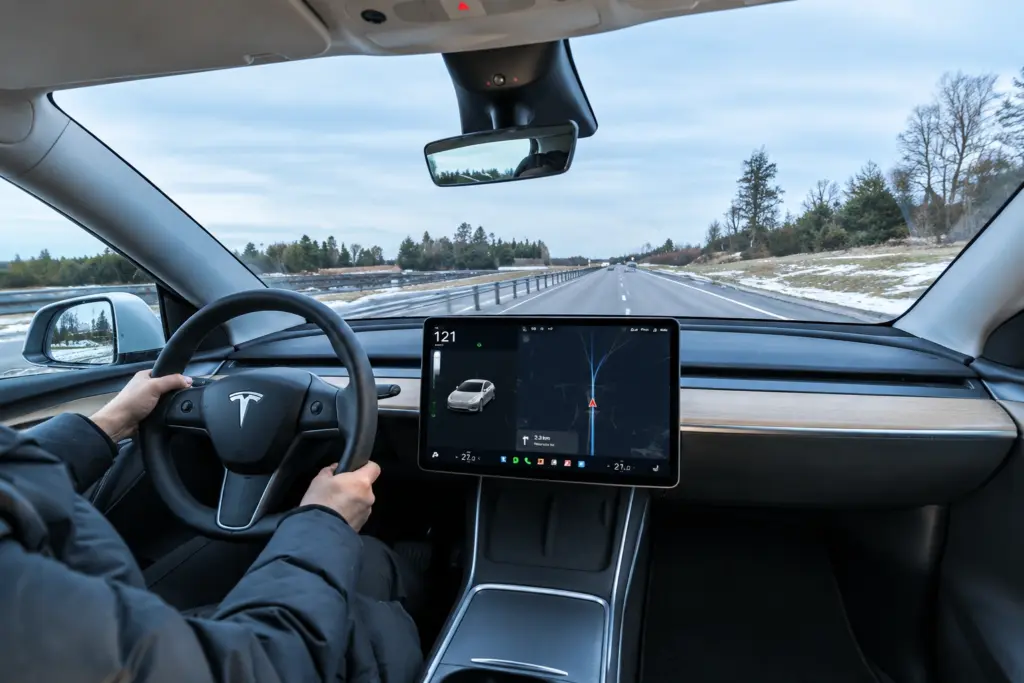
Tesla vehicles are different from many conventional cars because their vehicle data, diagnostics, and connected systems are closely integrated. Whether a mileage blocker can work on a Tesla depends on the vehicle’s specific architecture and technology, not simply whether it has an electronic odometer.
Tesla vehicles use an integrated diagnostic and software environment that includes Service Mode, Service Mode Plus, Toolbox, vehicle signals, alerts, and diagnostic trouble codes. Moreover, the odometer is also a vehicle signal displayed on the screen through Tesla’s diagnostic systems.
Can You Put a Mileage Blocker on a Tesla?
There is no single yes or no answer for every Tesla. A device should only be considered compatible when it has been specifically designed and confirmed for the exact Tesla model and configuration.
Compatibility depends on how the Tesla handles odometer information and how its electronic systems communicate. Tesla’s software and hardware architecture, combined with connected vehicle systems, makes compatibility more complex. The vehicle’s architecture also varies by model, production year, and configuration.
So, a mileage blocker compatible with a particular petrol or diesel vehicle doesn’t mean it is compatible with a Tesla Model 3, Model Y, Model S, or Model X. It is important to understand how Tesla vehicles generate, process, and make mileage available.
Base any compatibility claim on the exact vehicle, not a general statement that a device works with “Teslas.”
Why Tesla Is Different From a Conventional Car
Tesla is an electric vehicle, but the key difference isn’t the electric powertrain.
Modern Tesla vehicles are built around a more integrated electronic and software architecture that controls and monitors many aspects of the vehicle. Vehicle information in Tesla isn’t confined to a single dashboard display like it is in traditional internal combustion engines (ICE). It can be accessed through diagnostic interfaces and vehicle systems, and Tesla’s own service tools also draw on that data directly. In addition to the car, Tesla also stores certain vehicle and account data on its cloud servers.
Tesla provides diagnostic software and a Service Mode interface for diagnostics and repair, giving access to vehicle information, live CAN signals, audio testing applications, and interactive replacement procedures.
This makes direct comparisons between a Tesla and an older conventional vehicle unreliable. A device designed for a particular petrol or diesel vehicle may interact with that vehicle’s electronics in ways that don’t apply to a Tesla.
How Does Tesla Record Mileage?
Tesla’s documentation confirms that the odometer is available as a vehicle signal. Tesla regularly records the vehicle’s operational and diagnostic data and may transmit it to Tesla’s servers depending on the circumstances and data category.
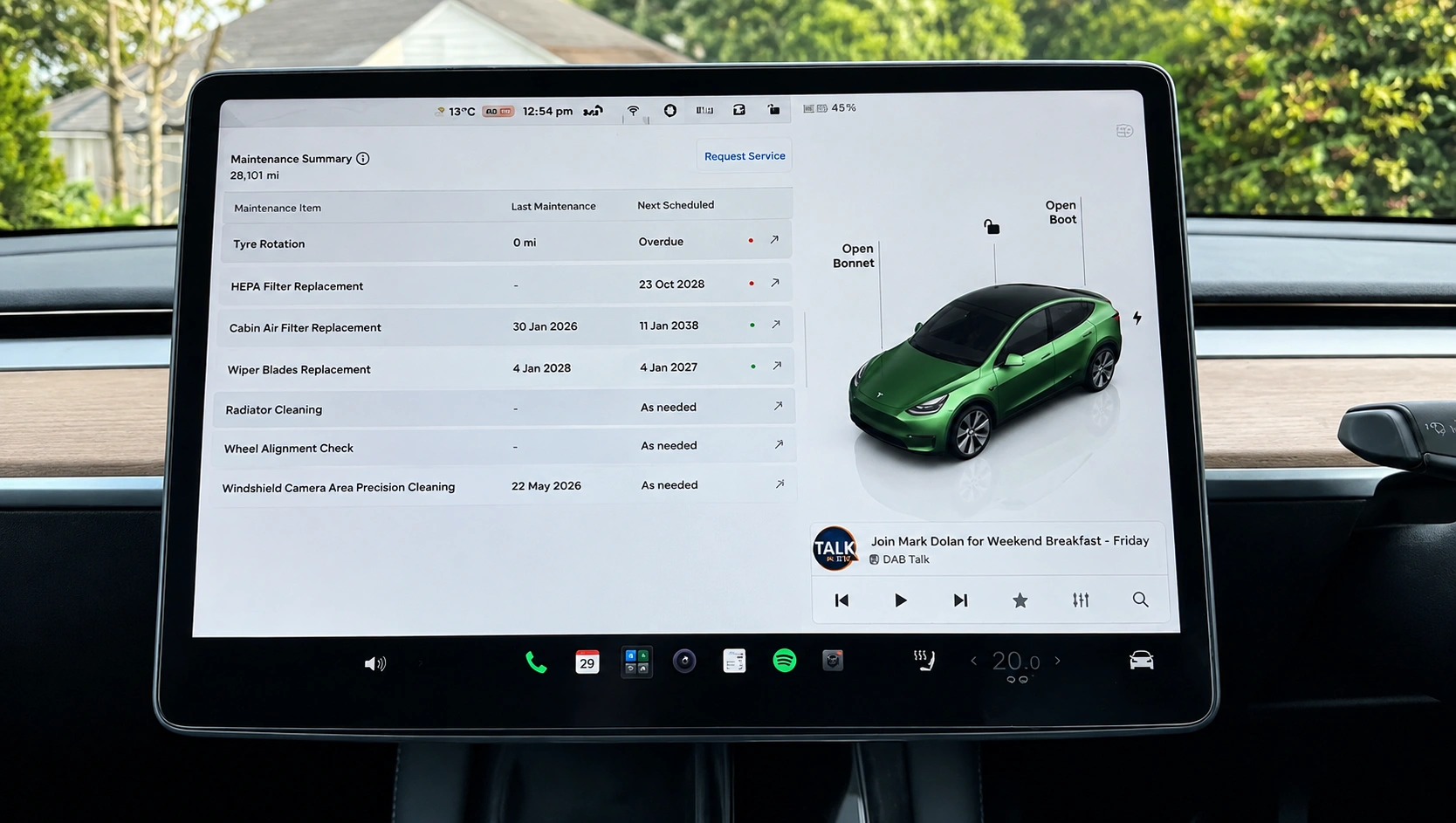
Tesla’s Service History provides another place where mileage can appear. Maintenance records can include the date and odometer reading associated with a service event, along with information about who recorded the maintenance action.
However, an important distinction matters.
Mileage information in several systems does not necessarily mean each system contains an independent copy of the odometer. Some information may be a vehicle signal, some may be associated with a service event, and other information may relate to vehicle usage or diagnostics.
Therefore, it is better to think of Tesla mileage as part of a wider vehicle-data environment rather than assuming there is one simple mileage value stored in one location.
Does Tesla Service History Record Mileage?
Yes. Tesla’s Service History feature records maintenance actions with the date and odometer reading at the time the maintenance took place.
Service History stays with the vehicle and can include records from Tesla Service, independent repairers, or other entries. Owners can also add maintenance records themselves; when logged, the car automatically attaches the current date and odometer reading to the record.
Remember: A service record is a historical record of a maintenance event. Do not treat it as a separate, independently verified odometer.
Tesla also states that the vehicle owner is responsible for the accuracy of records entered for independent repairs or DIY maintenance.
Why Conventional Mileage Blockers May Not Work the Same Way on Tesla
Many traditional mileage blockers are incompatible with Tesla. Why These Blockers May Not Work the Same Way on Tesla Vehicles
Integrated Vehicle Electronics
Tesla vehicles use integrated electronic systems that communicate with one another to control and monitor vehicle functions.
Tesla vehicles contain multiple electronic control systems and expose numerous vehicle and diagnostic signals through their service and telemetry infrastructure. Interfering with vehicle communications can produce diagnostic faults or affect vehicle functions, but the precise effect depends on the vehicle architecture and the nature of the intervention.
This means a device intended for one type of vehicle architecture cannot automatically be expected to interact with a Tesla in the same way.
Software-Defined Vehicle Architecture
Software plays a significant role in modern Tesla vehicles. Functions, diagnostics, and vehicle information can depend on the software version installed on the vehicle and its underlying hardware. Software updates can change vehicle functionality and diagnostic behavior, and Tesla’s diagnostic tools can report ECU update status and vehicle faults.
Tesla’s Service Mode documentation notes that available functions can vary by vehicle model, year, software version, and installed hardware. That is one reason a compatibility claim needs to be specific, not based only on the Tesla badge or model name.
Connected Vehicle Data
Tesla vehicles can also communicate vehicle information through connected and telematics systems.
Tesla service centers can access the live vehicle information and can cross-reference logs during routine physical or remote diagnostics to evaluate discrepancies. Tesla vehicles can generate and transmit certain vehicle, diagnostic, and usage information through connected systems, depending on settings, permissions, and applicable data policies. This data can be accessed through authorized diagnostic and account systems.
Odometer Data Is Not Just a Dashboard Display
Tesla treats odometer data as a vehicle signal. The odometer value is available as a vehicle signal within Tesla’s diagnostic environment.
Traditional blockers physically intercept or filter data before it reaches the dashboard. So, even if a mileage blocker blocks the signal to Tesla’s screen, other vehicle systems may continue to generate operational data while the displayed odometer signal is unavailable or altered. But Tesla’s public documentation does not establish that every relevant subsystem maintains an independent cumulative odometer.
Moreover, Differences or communication issues between vehicle systems may result in diagnostic warnings or require further investigation depending on the vehicle architecture.
Where Can Tesla Mileage Information Exist?
Mileage-related information can appear in several different contexts. Mileage-related information can exist in several places besides the odometer, including:
- Vehicle telemetry
- Diagnostic information
- Tesla Service History
- Maintenance records
- Tesla account or vehicle data
- Other vehicle-history records where applicable
These sources do not necessarily contain identical information or independent odometer readings.
Does a Tesla Mileage Blocker Change the Odometer?
Not necessarily, and you shouldn’t assume either way.
The existence of an electronic odometer does not tell you how a particular Tesla would respond to a mileage-related device. Compatibility with a Tesla cannot be inferred from compatibility with another vehicle. It must be established for the specific Tesla model, production configuration, and software/hardware environment.
Therefore, it is not technically responsible to assume that a device will or will not affect Tesla mileage simply because it works on another electronically controlled vehicle.
Mileage Blocking vs Mileage Correction on a Tesla
These terms describe different things:
- Mileage blocking: Understanding how mileage blockers work and their intended applications can help explain why compatibility varies between vehicles.
- Mileage correction: Changing a mileage value that has already been recorded.
- Mileage history checking: Comparing available records and information to determine whether a vehicle’s mileage timeline appears consistent.
Understanding the difference between mileage blocking and mileage correction is important because blocking mileage information is not the same as changing it.
Are Mileage Blockers Legal on Tesla?
The legality of using a mileage blocker depends on the country, circumstances, and intended use.
Using equipment to misrepresent a vehicle’s mileage can create legal, contractual, and consumer-protection issues, particularly where mileage is relevant to a vehicle sale, lease agreement, insurance policy, or other transaction.
Therefore, it would be too broad to say that every use of a mileage blocker is illegal everywhere. The intended application matters.
For Smelecom, mileage-related equipment is intended for permitted uses such as off-road, motorsport, development, and testing. Anyone considering such equipment should make sure its intended use complies with applicable laws and contractual requirements.
What Should Tesla Owners Check Before Buying a Mileage Device?
If you are assessing whether a mileage-related device is compatible with a Tesla, start with the vehicle itself rather than the general product category. Check:
- Exact Tesla model – Model 3, Model Y, Model S, Model X, or another vehicle.
- Model year – Different production periods can have different hardware and software configurations.
- Hardware configuration – Electronic components and vehicle architecture can vary.
- Software or firmware version – Relevant diagnostic and vehicle functions can change with software.
- Intended use – Make sure the intended application is permitted.
- Documented compatibility – Look for compatibility specifically stated for the exact vehicle.
- Technical support – If compatibility is unclear, ask the manufacturer or supplier to confirm it for the exact vehicle.
Avoid assuming that a device compatible with another vehicle will behave identically on a Tesla.
Final Thoughts
So, can you put a mileage blocker on a Tesla?
No single answer applies to every Tesla. Tesla vehicles use integrated electronic and software systems, and mileage information can vary by model, year, hardware, and software configuration.
A mileage blocker designed for a conventional vehicle won’t work with a Tesla. The same applies to assumptions about where mileage is stored or whether a device would affect the vehicle’s recorded mileage.
For anyone assessing a Tesla-specific device, the safest approach is to establish compatibility for the exact vehicle and intended use rather than relying on general claims based on the presence of an electronic odometer.



Not sure which module fits your vehicle?
Use our vehicle finder or talk to our UK support team.