Where Else Can a Car Store Mileage Data Besides the Odometer?
The visible odometer isn’t the only place a vehicle can store mileage information. Depending on the vehicle, mileage or distance-related...
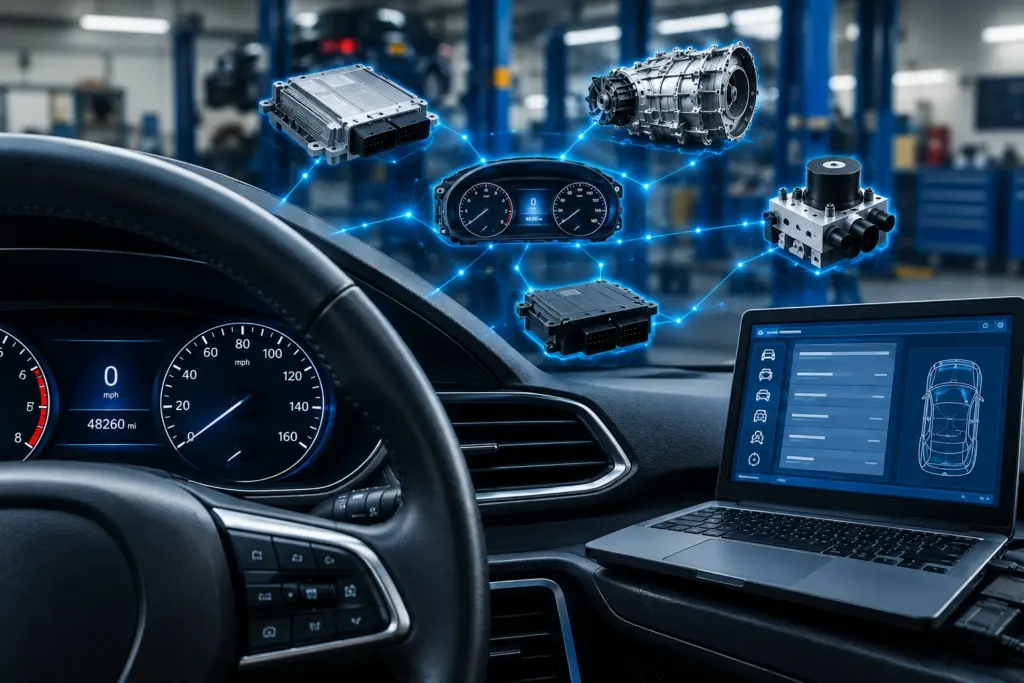
The visible odometer isn’t the only place a vehicle can store mileage information. Depending on the vehicle, mileage or distance-related data may also be held in the instrument cluster, engine or transmission control modules, ABS-related systems, gateway modules, service records, and external vehicle-history databases.
However, an important distinction remains. Not every vehicle stores mileage in the same modules, and some systems may hold calculated distance, operating data, or other mileage-related information rather than an independent odometer reading. The way mileage data is stored depends on the manufacturer, model, year, and the vehicle’s electronic architecture.
Understanding where these records can exist helps when checking a car’s mileage history or investigating a discrepancy between the odometer and other records.
1. Instrument Cluster
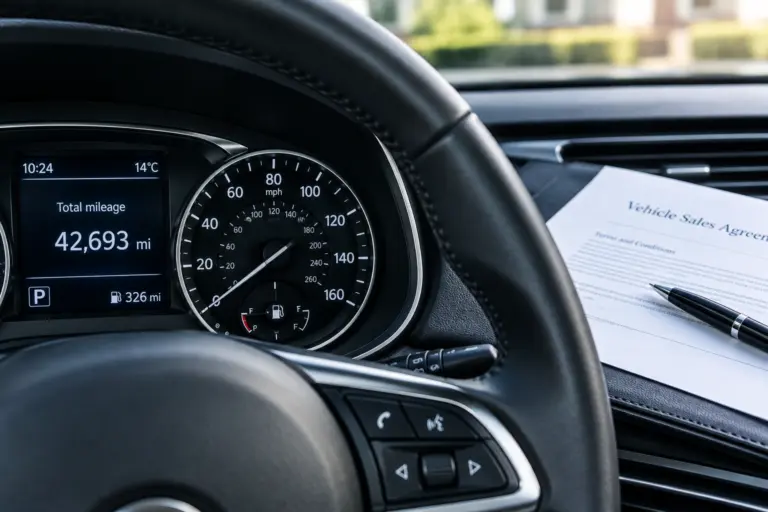
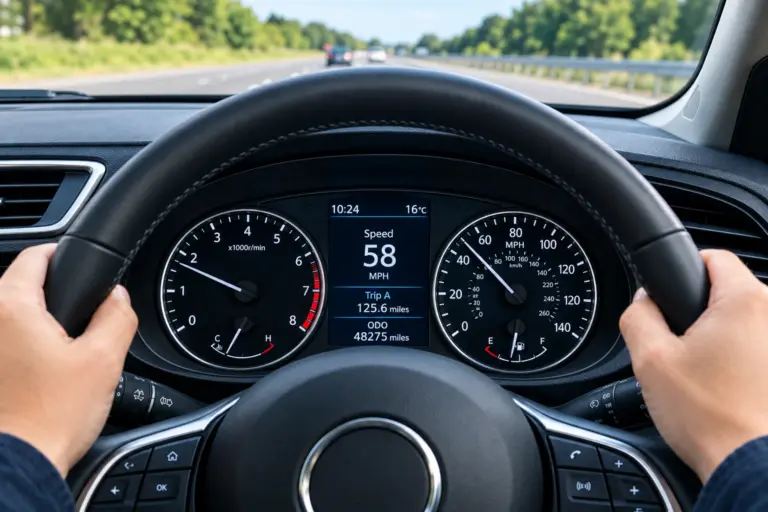
The instrument cluster is the dashboard assembly that displays the vehicle’s speed, warning lights, and the current odometer reading.
For the driver, this mileage figure matters most because it shows the vehicle’s accumulated mileage. Depending on the vehicle, the cluster may also retain other information about the vehicle’s use or configuration.
The cluster is not necessarily the only electronic location where mileage information exists. Modern vehicles can have several control modules communicating with one another, and what they store varies by manufacturer.
When an instrument cluster is replaced or serviced, the displayed mileage may not match information previously stored in the vehicle, depending on the vehicle’s design and how the replacement is configured.
That is the reason a difference between the displayed mileage and another stored value needs to be investigated rather than immediately treated as evidence of tampering.
2. Engine Control Unit (ECU)
The Engine Control Unit (ECU), sometimes called the Engine Control Module (ECM) or collectively known as the car’s computer, manages many aspects of engine operation. On some vehicles, it can also contain mileage-related information.
The available information is vehicle- and ECU-dependent. For example, Ross-Tech’s documentation for certain Volkswagen Group vehicles describes a mileage function for specific EDC15 and EDC16 engine control units. This shows that an ECU can contain a mileage value that suitable diagnostic equipment can retrieve on supported vehicles. It does not mean that every ECU stores an independent odometer reading.
An ECU value is one piece of information; when checking mileage, it should not be considered the vehicle’s odometer reading.
3. Transmission / Gearbox Control Module
The Transmission Control Module (TCM), or related gearbox electronics, controls and monitors an automatic or electronically controlled transmission.
On some vehicles, transmission-related electronics may also retain mileage or distance-related information. Exactly what is stored, and whether it represents accumulated mileage, calculated distance, or another vehicle-use value, depends on the manufacturer’s system architecture.
No universal rule requires every transmission control module to contain a separate mileage reading. Instead, it may be another source of information available during a professional diagnostic assessment.
4. ABS and Other Control Modules
The ABS control module monitors wheel-speed information and performs functions associated with the vehicle’s braking and stability systems. Depending on the vehicle, this or other electronic modules may provide related distance or vehicle-use information.
Other modules can include:
- Body Control Module (BCM)
- Airbag or restraint systems
- Steering-related modules
- Instrumentation systems
- Other manufacturer-specific control units
This does not mean that every module permanently stores the same mileage figure. Some may hold mileage, while others may contain calculated distance, operating hours, event information, or service-related data.
5. Gateway and Other Network Modules
Modern cars contain multiple electronic control units that communicate across the vehicle’s electronic network.
A vehicle gateway module helps manage communication between different parts of this network. Depending on the manufacturer and vehicle architecture, gateway and other network-related modules may contain vehicle history or mileage information.
The underlying architecture can vary considerably between vehicles. Some cars may have relatively simple electronic arrangements, while newer vehicles can contain numerous interconnected control modules.
That is why mileage data shouldn’t be discussed as though every modern car has the same storage structure. The specific manufacturer, model, year, and equipment can all affect what information is available and where it is stored.
Is Mileage Stored in the ECU?
Sometimes, yes. Some vehicles store mileage-related information in the ECU, and diagnostic software may be able to retrieve it on supported systems. However, an ECU is not automatically a second odometer on every vehicle.
There are several important points to keep in mind:
- Some ECUs contain mileage-related information; others may not.
- The information can vary by ECU type and vehicle.
- Some values may be independent mileage readings, while others may be calculated or related data.
- Diagnostic equipment may be able to access certain values.
- Do not treat an ECU reading as the vehicle’s odometer reading.
The Ross-Tech example involving certain EDC15 and EDC16 ECUs is useful here because it illustrates the vehicle-specific nature of mileage storage. You should not generalize it to every car or every ECU.
Can Mileage Be Stored in Multiple Control Modules?
Yes, a vehicle can store mileage-related information in multiple electronic systems, but that does not mean every module will contain the same mileage figure.
A modern car may have numerous interconnected control modules. Different systems can retain different types of information depending on what the module needs to do.
For example, stored information may include:
- Mileage
- Calculated distance
- Operating hours
- Service-related values
- Event or history information
- Other vehicle-use data
This distinction is important when comparing an odometer with information retrieved during a diagnostic scan.
If two systems show different figures, you need to understand the difference in the context of the vehicle’s design and the type of data each system stores. Multiple data points help with cross-checking, but they don’t always match exactly.
Why Would a Car Have Mileage in More Than One Place?
Several legitimate technical reasons explain why a vehicle may store mileage information in more than one location.
Vehicle System Communication
Electronic modules communicate with one another to support different vehicle functions. Information about vehicle use can therefore be relevant to systems beyond the instrument cluster.
The exact information shared and retained depends on the vehicle’s electronic architecture.
Service and Maintenance
Mileage is closely connected with servicing and maintenance intervals.
A vehicle’s systems and service records can use mileage-related information to determine when maintenance is due or to document previous work.
Diagnostic Checks
Stored information can also help technicians investigate vehicle issues.
When a vehicle is connected to suitable diagnostic equipment, supported modules may provide information that helps establish whether the systems are operating as expected or whether further investigation is required.
Module Replacement
Electronic components may not retain identical information throughout a vehicle’s lifetime, especially when modules are replaced or reconfigured.
For example, replacing an instrument cluster or another control module can create differences between previously stored information and what is displayed after replacement, depending on the vehicle and how its systems are configured.
A mileage mismatch does not automatically prove fraud. You need to determine the reason for the difference by reviewing the vehicle’s broader history and technical information.
What Can Cause a Mileage Discrepancy?
A discrepancy means the mileage shown in one place does not match information found elsewhere.
There can be several possible explanations, including:
- Instrument cluster replacement
- ECU or other control-module replacement
- Incorrect module configuration
- Diagnostic or service procedures
- Different systems calculating or recording distance differently
- Genuine mileage alteration
- Incomplete service or vehicle records
- Differences resulting from vehicle’s electronic architecture
You cannot distinguish all these possibilities simply by looking at one stored number. For example, if a diagnostic scan produces a mileage-related value that differs from the dashboard, that alone does not establish when or why the difference occurred. The more useful approach is to compare the available information and establish a timeline.
How Can Mileage Be Cross-Checked?
Mileage verification works best when you consider several independent sources together.
Diagnostic Scan
A suitable diagnostic scan can allow a qualified technician to inspect supported control modules and identify mileage-related information where the vehicle makes it available.
What a diagnostic scan can reveal depends on the vehicle and the equipment being used. Treat the results as one part of the mileage check, not as a guaranteed second odometer reading.
Service Records
Service and repair documentation can provide useful historical mileage points by showing when maintenance or repairs were carried out and the mileage recorded at those times.
These records may include service invoices, maintenance records, inspection documents, repair documentation, and parts or warranty records where available. Reviewing a sequence of dated records can help establish how the vehicle’s mileage has developed over time and identify whether the available history follows a consistent timeline.
MOT History
For UK vehicles, MOT history is another useful source when checking mileage.
MOT records can show the mileage recorded when the vehicle underwent an MOT test, allowing a buyer or owner to compare historical readings with the current odometer. GOV.UK provides access to a vehicle’s MOT history and the mileage recorded at individual tests.
MOT history is not a complete record of everything that has happened to a vehicle, but it can provide valuable points in the mileage timeline.
Vehicle History Reports
Vehicle-history services can bring together mileage information from multiple sources.
For example, carVertical explains that its reports can include mileage records from sources such as maintenance visits, police records, and other records, while also noting that available sources vary by country.
That variation matters. Consider a vehicle-history report alongside MOT records, service documentation, and other available evidence, rather than treating it as an infallible record.
Does a Different Mileage Reading Always Mean the Odometer Has Been Tampered With?
No. A difference between the dashboard reading and information found elsewhere does not automatically establish odometer fraud.
There can be legitimate explanations, including:
- Replaced control modules
- Instrument cluster replacement
- Different methods of calculating or recording distance
- Incomplete historical records
- System or configuration changes
- Vehicle-specific electronic architecture
So, if an ECU contains a different mileage-related value from the instrument cluster, the next question is not simply “which number is correct?” It is: why do the values differ, what type of information does each system contain, and what does the wider vehicle history show?
A detailed mileage history check can help interpret information from supported vehicle systems, while documented records can help establish the historical timeline.
Mileage Data vs Mileage Correction vs Mileage Blocking
Buyers researching vehicles and carrying out inspections often come across terms like “mileage correction” and “mileage blocking” and may assume they mean the same thing.
- Mileage data storage is where a vehicle or external record retains mileage-related information.
- Mileage correction refers to changing an already recorded mileage value.
- Mileage blocking refers to preventing additional mileage from being recorded while a device is active. Understanding how a mileage blocker works and what it is designed for can help clarify how this differs from mileage correction.
A mileage blocker is therefore not a mileage correction device and does not rewrite already recorded mileage.
Keeping these concepts separate matters when researching mileage data, because where mileage is stored is a different question from how mileage may be recorded or changed. The distinction between mileage correction and mileage blocking is important because they involve different actions and outcomes.
How to Investigate a Mileage Discrepancy
If you find different mileage figures in different places, work through the available evidence rather than focusing on one number.
- Check the Current Odometer: Start with the mileage currently displayed on the vehicle. Record the figure and note the date and vehicle details associated with the check.
- Review MOT History: For UK vehicles, check the historical MOT records and compare the recorded mileage over time. Look for a logical progression between test dates.
- Review Service and Repair Records: Check invoices, maintenance documentation, and repair records for additional mileage points. Dated records can help fill gaps between MOT tests.
- Obtain a Professional Diagnostic Scan: Have the vehicle inspected using suitable diagnostic equipment. A technician may be able to access supported control modules and identify mileage-related information available on that particular vehicle. Compare these numbers carefully. Remember that different systems may store different types of information, so don’t assume they match exactly.
- Investigate Module Replacement History: Find out whether the instrument cluster, ECU, or another relevant electronic module has previously been replaced. A replacement can help explain why different records may contain different information.
- Use a Vehicle-History Report: Where appropriate, obtain a vehicle-history report to look for additional mileage records that may not appear in the MOT or service history.
- Look at the Complete Timeline: Finally, consider all available evidence together.
The most useful mileage check is rarely based on one isolated number. A combination of the current odometer, electronic data, MOT history, service records, repair documentation and other vehicle-history information can provide a much clearer picture.
Final Thoughts
So, where is mileage stored besides the odometer?
The answer depends on the vehicle. Mileage-related information may exist across different vehicle systems and external records, but the type of information available varies by manufacturer, model, and vehicle architecture.
However, not every vehicle stores the same information in the same places. Some systems may contain an independent mileage value, while others may hold calculated distance, operating information, or service-related data.
That is why you should investigate a mileage discrepancy rather than automatically interpreting it as evidence of tampering. Comparing multiple records and understanding the vehicle’s specific electronic architecture provides a more reliable basis for mileage verification than relying on one number alone.



Not sure which module fits your vehicle?
Use our vehicle finder or talk to our UK support team.