How to Choose the Correct Mileage Blocker for Your Car
The correct mileage blocker is selected by matching the device to your vehicle’s exact details, including manufacturer, model, production year,...
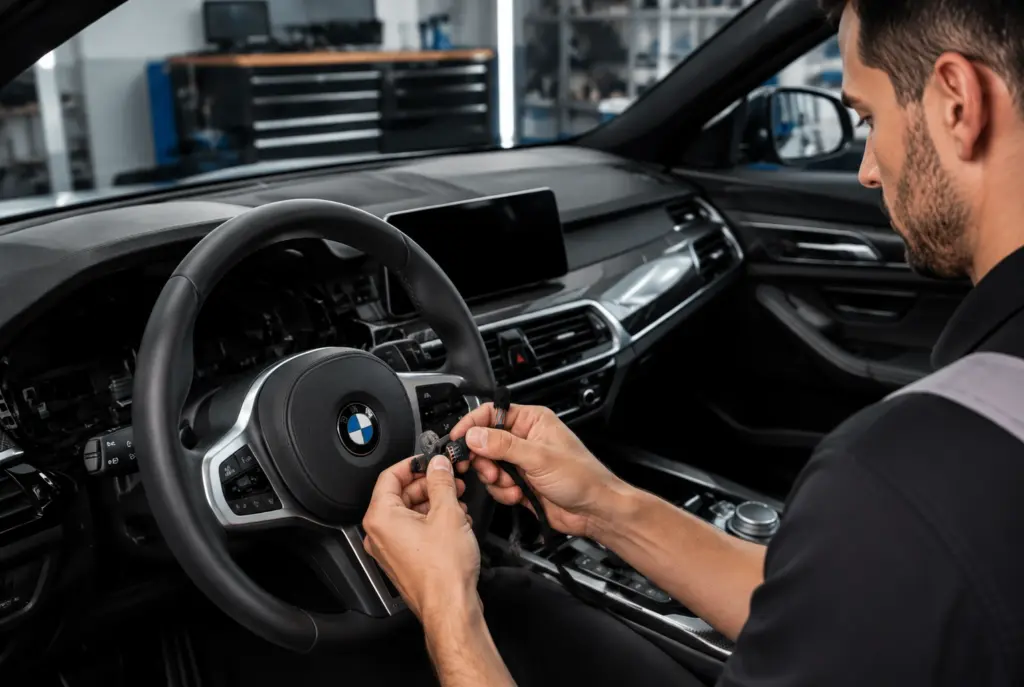
The correct mileage blocker is selected by matching the device to your vehicle’s exact details, including manufacturer, model, production year, generation, dashboard type, and the compatibility information shown on the product page. A BMW, Audi, Ford, or Mercedes can have different compatibility requirements depending on the production year, vehicle generation, dashboard type, and instrument cluster configuration.
Before ordering, always check your vehicle details and compare them with the compatibility information provided on the specific product page. This includes the vehicle make, model, year, generation, dashboard or instrument cluster, and any additional options mentioned by the manufacturer.
This guide explains what to check before choosing a mileage blocker, helping you identify the correct product for your vehicle.
1. Start With Your Vehicle Details
The first step when choosing a mileage blocker is collecting accurate information about your vehicle. A model name alone is usually not enough because manufacturers often use the same badge across multiple generations with different electronic systems.
Having the correct vehicle details makes it easier to match your car with the right product listing.
Vehicle Manufacturer
Start by identifying your vehicle manufacturer. Common examples include BMW, Audi, Mercedes-Benz, Ford, and Volkswagen, etc.
However, the manufacturer is only the starting point. A single brand can have many models, generations, and electronic configurations, meaning a mileage blocker designed for one vehicle may not be suitable for another model from the same manufacturer.
For example, a BMW 3 Series and BMW 5 Series may belong to the same brand family but require different mileage blocker applications because they use different vehicle platforms and systems.
Exact Model
The next step is confirming your exact vehicle model. Different models from the same manufacturer can have completely different compatibility requirements.
- A BMW 3 Series mileage blocker is not automatically suitable for a BMW 5 Series.
- An Audi A4 module is not interchangeable with an Audi A6 application.
- A Ford Ranger and Ford Transit require different product specifications.
The model name helps narrow down the options, but it should always be checked together with the production year, generation, and product compatibility details.
Production Year
Vehicle electronics can change throughout a model’s production cycle. Facelifts, generation updates, and dashboard changes can affect compatibility even when the vehicle name remains the same.
Two vehicles with the same model badge may require different mileage blockers if they were produced in different years. Always confirm your vehicle’s production year before selecting a product.
2. Check the Vehicle Generation or Platform
Many manufacturers update their vehicle platforms and electronic systems between generations. This means the generation code can be just as important as the model name. For example:
- Audi platform codes
- BMW chassis generations
- Mercedes model generations
You do not need to know every platform code before purchasing. However, understanding that generations can use different systems helps avoid choosing a product based only on the vehicle badge.
In many cases, the correct mileage blocker is selected by matching the generation or platform rather than the general model name.
3. Confirm Your Dashboard and Instrument Cluster
The dashboard and instrument cluster are important compatibility references, especially for newer vehicles with updated digital systems. Modern vehicles can have different instrument setups, including:
- Traditional analogue clusters
- Digital instrument clusters
- Virtual Cockpit-style displays
- Updated digital dashboard systems
These differences can indicate changes in the vehicle’s electronic configuration.
When checking a mileage blocker product page, compare your vehicle’s dashboard or instrument cluster with the images and compatibility details provided.
For example, some Audi applications require buyers to confirm whether their vehicle uses a specific cockpit configuration or connector type before ordering. The Audi A6/S6/RS6 C8 4K mileage blocker is one example where dashboard and vehicle configuration details are important for selecting the correct product.
Is a Mileage Blocker Universal?
No. Mileage blockers are not universal devices. Different vehicle manufacturers, models, and generations can use different electronic systems and communication methods. So, a mileage blocker designed for one configuration may not be compatible with another, even if both vehicles are from the same manufacturer.
That’s why it is essential to use a vehicle-specific mileage blocker. You can identify them using essential information, including model name, dashboard/instrument cluster, and vehicle generation or platform.
You don’t have to be a professional or mechanic to understand the technical architecture. What matters is matching your vehicle’s details with the mileage blocker’s compatibility information.
4. Check the Product Compatibility Information
Once you know your vehicle details, compare them against the specific mileage blocker product page. Important information to check includes:
- Supported vehicle models
- Production years
- Vehicle generation or platform
- Dashboard or instrument cluster images
- Software updates where mentioned
- Connector information
- Installation details
The product title usually provides the main vehicle application, but the full compatibility information provides the details needed to confirm fitment. Always use the individual product detail as the final reference before ordering, as compatibility requirements can vary between vehicle versions.
What Information Should You Have Before Ordering?
Before choosing a mileage blocker, prepare the following vehicle details:
- Vehicle manufacturer
- Exact model or series
- Production year
- Engine or variant (if required)
- Vehicle generation or platform (where known)
- Dashboard or instrument-cluster details
- Product compatibility information
Having this information ready makes it easier to compare your vehicle with the available mileage blocker options and avoid selecting a product based only on appearance or model name.
What If You Cannot Find the Correct Mileage Blocker?
If you cannot find a product that clearly matches your vehicle, avoid choosing a similar-looking module based only on the manufacturer or model name. Instead, contact Smelecom with your vehicle details, including:
- Make and exact model
- Production year
- Vehicle generation (if known)
- Dashboard or instrument-cluster details
The team can help review the available compatibility information and guide you toward the correct product option before ordering. Choosing the correct mileage blocker before purchase is always better than relying on assumptions.
How to Choose the Correct Mileage Blocker: Final Checklist
The correct mileage blocker is not selected by brand name alone. It should be matched to your exact vehicle specification and the compatibility details provided for the product. Before ordering, follow these steps:
- Identify your exact vehicle: Confirm the manufacturer and model.
- Check the production year and generation: Make sure the vehicle platform matches the listed application.
- Compare the dashboard and instrument cluster: Use the product images and compatibility details as a reference.
- Review the product information: Check supported models, years, connectors, and any listed requirements.
- Ask before ordering if unsure: Provide your vehicle details to Smelecom so compatibility can be confirmed.
Taking these steps helps you select a vehicle-specific mileage blocker that matches your car’s specifications.
Not sure which module fits your vehicle?
Use our vehicle finder or talk to our UK support team.