Car Mileage Discrepancy Diagnostics: What the Numbers Are Telling You
A mileage discrepancy is a point where two records of the car show different distances travelled. Finding a mismatch does not automatically mean the car has been clocked. The key is understanding which figures disagree, when the differences appeared, and whether there is a documented explanation for the discrepancy.
A proper diagnosis starts with dated records, then the car’s repair history, then a full-system diagnostic scan. Working through all three either explains the discrepancy or narrows down what still needs explaining.
This guide explains how buyers, existing owners, and workshops can interpret mileage discrepancies and decide what to do next.
What Counts as a Mileage Discrepancy?
A mileage discrepancy generally falls into one of three categories:
- Record discrepancy: MOT, service, or vehicle history records show mileage readings that are out of sequence.
- Module discrepancy: The odometer figure disagrees with the figures stored in other electronic control units.
- Condition discrepancy: The vehicle’s physical wear appears inconsistent with the advertised or displayed mileage.
Each type needs different evidence, and the strongest diagnosis uses all three.
In September 2026, VehicleScore reviewed 1,136,102 vehicles with at least two valid mileage readings and found a later reading lower than an earlier one on 4.9% (55,875) of them. VehicleScore is clear that a lower reading is a discrepancy in the record, not proof that anyone tampered with the car. The figures describe only VehicleScore’s checked vehicles, not the entire UK car population.
Start With the Paper Trail Before You Plug Anything In
Records come first because MOT readings and dealer service entries are dated and made by third parties. That makes them much harder to rewrite after the event than a dashboard number.
Gather what you can from these sources:
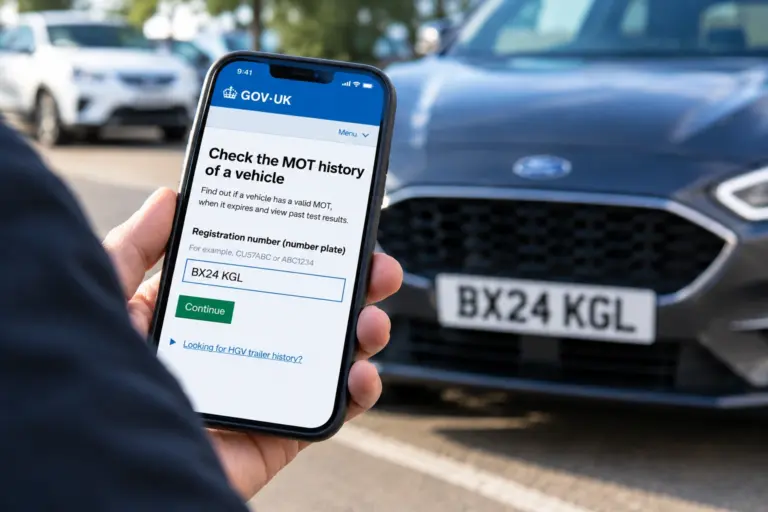
- GOV.UK MOT history: Shows previous test dates, recorded mileage, results, and advisories.
- Service book or digital service record: Look for mileage entries at scheduled maintenance intervals.
- Invoices and job cards from garages: Check repair, inspection, and maintenance documents for additional readings.
- Previous keepers and garages: Ask the seller which garages or dealers serviced the car and whether they can confirm the recorded mileage.
- Paid vehicle history check: Consider a paid vehicle history report that includes available mileage records, potentially including National Mileage Register information.
Checking car MOT history through GOV.UK provides credible records, but it has a limitation. Cars in Great Britain need their first MOT at three years old. In Northern Ireland, the first test is due at four years, and those tests are run separately by the DVA. So, for younger cars, dealer service records, maintenance invoices, and other dated records carry more weight.
Reading the Pattern in a Mileage History
A single odd number tells you little. The sequence of the readings tells you more. These are the patterns that come up most, and what each usually means:
- One reading dips, then the next is back on trend: This strongly suggests a keying error at the test. Check the surrounding test date and ask if the MOT centre can confirm the original entry.
- Reading roughly 1.6 times higher or lower than the trend: Usually a kilometres and miles mix-up, because 100,000 km is 62,137 miles. Check whether the cluster displays kilometres or miles.
- Drop, followed by lower readings that keep climbing from the new, lower base: This is a serious pattern and needs explanation with paperwork. Possible reasons include a replacement instrument cluster or a rolled-back odometer.
- Sudden jump that doesn’t fit how the car is used: Possibly a replacement cluster from a higher-mileage car, or simply a typo. Establish what happened before accepting the figure.
- Very low annual mileage for several years: Possible, particularly for a second car or a vehicle used occasionally. Compare the claimed use with the car’s condition and service intervals.
- A long gap in the record: The vehicle may have been SORN, stored, restored, or simply used infrequently. Ask for evidence rather than assuming the gap indicates tampering.
What a Diagnostic Scan Can and Cannot Show
Many modern cars hold mileage in more than one control unit, and stored fault codes often carry their own mileage stamp.
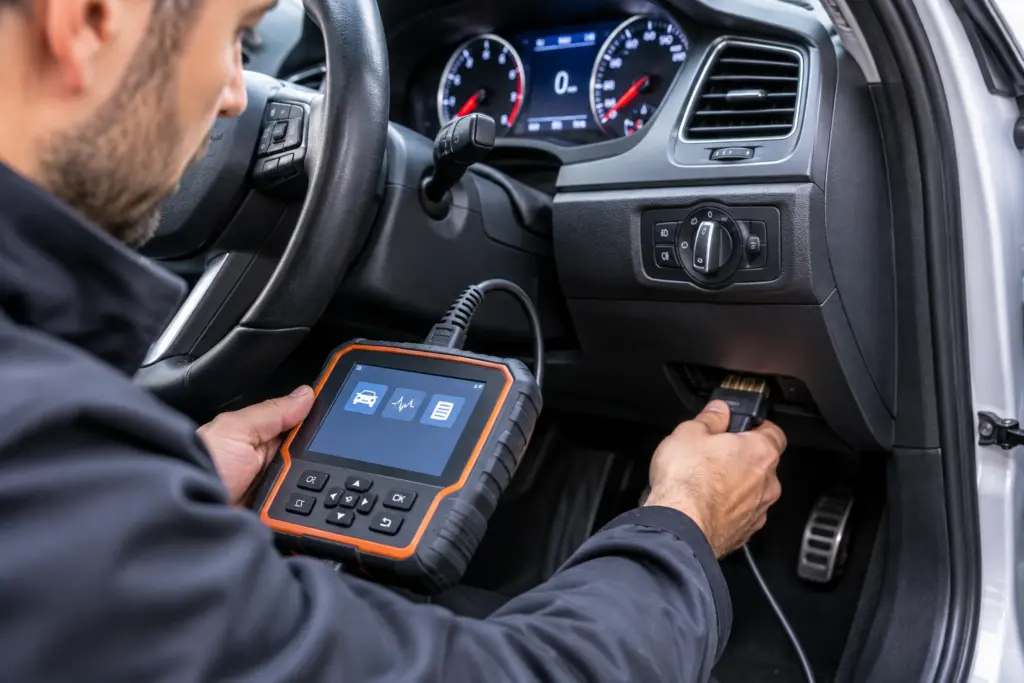
A full-system diagnostic scan reads those values so they can be compared with what the dashboard says. Workshop equipment such as the Bosch KTS 250 diagnostic tester is built to read across a car’s systems, not just the engine. Its mileage readout function lets technicians compare stored values with the displayed odometer figure.
Basic Code Readers vs Full-System and Dealer-Level Tools
Not all diagnostic equipment provides the same level of access.
Basic Engine-Only Readers plugged into the OBD-II port focus on emissions-related diagnostics and engine fault codes. They may provide useful information about engine faults, but they usually cannot access all manufacturer-specific modules needed for a thorough mileage investigation.
Full-System Consumer Diagnostic Tools can reach more, on supported cars. Depending on vehicle compatibility, they may retrieve mileage-related values, fault memory information, and other stored data. Consumer diagnostic platforms like Carly also use this approach to compare information stored in vehicle electronics.
Manufacturer-Level Diagnostic Equipment sees the most. It provides the most comprehensive access to supported vehicle functions and control modules.
That is why a franchised dealer or a marque specialist is the strongest second opinion when a discrepancy requires a vehicle-specific technical assessment. They can identify which values are relevant and whether a previous repair or module replacement could explain the difference.
Why a Clean Scan Is Not a Clean Bill of Health
A scan that shows no mileage mismatch does not guarantee a vehicle’s recorded mileage is genuine.
There are several reasons:
- Some cars keep mileage only in the instrument cluster, leaving no independent electronic figure to compare.
- Available diagnostic data depends on the vehicle’s electronic architecture and the equipment used.
- Some systems don’t store accumulated mileage. They may record distance, operating hours, or event information instead.
- A comprehensive alteration of stored values leaves no obvious electronic mismatch.
A scan also shows only what the electronics hold today. So, treat a scan as one witness, not the verdict.
How to Read Mismatched Module Readings
When a scan does return different figures, the pattern matters more than any single number:
- Dashboard lower than several other modules that agree with each other: The strongest electronic red flag. If multiple independent sources show a higher accumulated distance, the current odometer reading needs a documented explanation.
- One module out of line while the rest agree: Check whether that individual module was replaced, configured, or reprogrammed in the vehicle’s history.
- Fault-code mileage stamps higher than the current dashboard figure: This requires careful investigation. A stored fault event associated with a higher mileage may indicate that the vehicle previously displayed a higher figure. Check the event history and ask whether an instrument cluster or relevant module was replaced.
- Impossible values, such as negative numbers or a maximum placeholder like 16,777,215: Usually a tool reading error. Re-scan with a different tool before drawing any conclusion.
- Calculated distance or operating hours that differ slightly between modules: This is often normal because modules count differently, so their figures do not always match exactly.
The key is to ask for an explanation before accusing because the discrepancy does not prove clocking or the use of a mileage blocker. Photograph the diagnostic results, record the date, and identify the equipment used. If possible, ask the technician for a written report explaining which modules were checked and what the readings represent.
Honest Causes That Can Look Like Clocking
A mileage mismatch can have a legitimate technical or administrative explanation. The difference is that a genuine explanation should normally be supported by records.
Instrument Cluster Replacement
What it looks like: The dashboard displays a different mileage from historical MOT records or information retained elsewhere in the vehicle.
What proves it: An invoice identifying the replacement instrument cluster, the mileage recorded when it was changed and, ideally, documentation relating to the original unit.
Instrument clusters do fail and get replaced, so a mileage discrepancy may reflect a legitimate replacement. Replacements do not necessarily signify any tampering with the vehicle’s mileage. However, the mileage history needs to be recorded clearly.
Control Module Replacement or Incorrect Programming
What it looks like: One or more electronic systems show figures that differ from the dashboard or other modules.
What proves it: Repair invoices, replacement-part details, and diagnostic records showing which components were changed and how the vehicle was configured afterward.
If a replacement module isn’t programmed with the car’s current mileage, it can store a figure that doesn’t match the rest of the vehicle.
MOT Input Errors
What it looks like: One MOT entry shows a lower or unusually high mileage, while earlier and later readings follow a more consistent progression.
What proves it: Supporting paperwork from the testing date, such as an invoice, emissions printout, service receipt or job card.
The DVSA reported in April 2023 that it received more than 14,000 requests every year to correct MOT mileage readings. This shows that recording errors are a genuine source of discrepancies.
Kilometres and Miles Confusion
What it looks like: The figures differ by approximately the conversion ratio between kilometres and miles.
What proves it: Import documentation, previous registration records, instrument cluster specifications, or service documents showing the original unit of measurement.
Common on imported cars. Always establish which unit was used in each record before comparing the figures.
Diagnostic Tool Misreads
What it looks like: A scan returns an implausible value, an unsupported reading, or a figure that conflicts with other available information.
What proves it: A second scan using compatible manufacturer-level equipment, supported by a technician’s explanation of the original reading.
Different diagnostic tools can interpret or access vehicle data differently. A questionable result should be checked before it becomes part of a vehicle’s mileage history.
Mileage Blocker Use for Testing and Development
What it looks like: The dashboard shows a lower mileage than the car’s real use would suggest, or the figure barely moves over a period when the car was clearly active. Control modules that the blocker doesn’t affect may show a higher distance than the dashboard.
What proves it: A dated record of the work the car was doing while the blocker was fitted, such as dyno session sheets, development or test logs, track day entries or workshop job cards. It should also show when the blocker was fitted and removed, and the true distance covered in that period.
Mileage blockers have lawful uses. Cars on a dyno run at speed without going anywhere, so a rolling road session can add miles that say nothing about road use. Engineering teams and tuning workshops do the same during development, calibration, and repeat testing. A mileage blocker in use does not signify any tampering. However, the real usage needs to be recorded clearly, kept with the car, and given to any buyer in writing, with the recorded mileage during these sessions.
An honest cause should leave a paper trail. If a seller claims that a cluster or control module was replaced but cannot provide any supporting documentation, the discrepancy remains unexplained.
Is a Mileage Discrepancy Illegal?
The discrepancy itself is not an offence. The legal position depends on what caused it, what the seller knew, and how the vehicle’s mileage is represented to a buyer.
For traders, the relevant rules are the unfair commercial practices provisions in Part 4, Chapter 1 of the Digital Markets, Competition and Consumers Act 2024, which have applied since 6 April 2025. Misleading consumers about a vehicle’s mileage, or withholding important information, can fall within these rules.
The CMA’s guidance, CMA207, and its companion examples page explain how these rules work, including an example of a trader selling a second-hand car with false mileage.
The Fraud Act 2006, particularly Section 2 on fraud by false representation, can also apply where someone dishonestly makes a false or misleading representation intending to make a gain or cause another person a loss.
There is a simple habit that protects sellers. If you know the recorded figure does not reflect the distance the car has actually covered, for any reason, say so in writing and record the mileage as unverified, because the accuracy cannot be established.
That applies whether the gap comes from a replaced cluster or an old MOT typo.
This is general information, not legal advice.
What to Do Once You Have a Diagnosis
Once you understand the likely source of the mileage discrepancy, the appropriate next step depends on whether you own the vehicle, are considering buying it, or have already completed the purchase.
If You Own the Car and a Record Is Wrong
The fix depends on how long ago the MOT took place.
Within 28 days of the MOT: Ask the test centre to correct it. They will need to see the car again to check the reading.
After 28 days: Report it to DVSA online, with evidence of the correct mileage dated within one day of the test. Accepted evidence is an MOT invoice, an emissions printout, a service receipt, or a job card from the MOT centre. An MOT certificate isn’t on the list of accepted evidence. The full steps are on GOV.UK’s Fix mistakes on your MOT record page.
Once DVSA has corrected the record, ask your history-check provider to update its National Mileage Register entry.
If the discrepancy resulted from a cluster or module replacement, keep the original repair paperwork so the next buyer can see it. In a bulletin to MOT centres, DVSA also stated that incorrectly recorded MOT mileage can reduce a vehicle’s value by up to 8%. This is a significant reason to address a genuine recording error rather than leaving it unresolved.
For discrepancies that are not MOT errors, the paperwork route above is still your best defence.
If You Are About to Buy
An unexplained discrepancy should be resolved before you commit. Work through this list:
- Ask the seller for a written explanation and the paperwork behind it.
- Book a pre-purchase scan with a marque specialist or a franchised dealer.
- Compare the scan results with the MOT history and service invoices.
- Check whether any replacement modules or previous repairs are documented.
- Confirm whether the seller’s explanation matches the available evidence.
If the seller describes the mileage as unverified, factor that into the vehicle’s value and your purchase decision.
If the explanation remains unclear, the paperwork contradicts it, or the seller’s account remains unconvincing, walking away is often the safer option.
If You Have Already Bought It
If you bought a car with a mileage discrepancy you were not told about, your options depend on who sold it.
- From a Trader: The Consumer Rights Act 2015 applies. Contact the dealer in writing first and provide the supporting records. Keep all communications and request a clear response.
- Paid by Credit Card: If you paid any part of the price on a credit card and the car cost between £100 and £30,000, Section 75 of the Consumer Credit Act 1974 makes the card provider jointly liable with the seller. If the provider doesn’t resolve it, you can take the complaint to the Financial Ombudsman Service.
Bought on HP or PCP: The finance company legally supplied the car, so raise the complaint with them directly. If they don’t resolve it, the Financial Ombudsman Service can review it. - Suspected Deliberate Clocking: If you have evidence for deliberate mileage tampering, report the matter to Trading Standards through Citizens Advice. Include physical details, purchase documents, mileage records, and any diagnostic reports you obtain.
- Private Sales: Private buyers generally have fewer protections than those purchasing from a trader. However, the car must still match how it was described under the Sale of Goods Act 1979, and a seller who knowingly makes a false representation may still face legal consequences.
Make the Mileage Story Add Up Before Money Changes Hands
A mileage discrepancy is best investigated as a timeline rather than an isolated number. Start with MOT and service records, compare the available readings, arrange a suitable diagnostic scan, and establish whether any replacement components or recording errors explain the difference. A genuine discrepancy may have a straightforward explanation, but it should be supported by evidence. If the figures cannot be reconciled, treat the vehicle’s mileage as unverified until the matter is properly investigated.
If you have questions about vehicle electronics or module compatibility, contact Smelecom technical support. Our team can help with technical questions about supported vehicle systems and module compatibility.



Not sure which module fits your vehicle?
Use our vehicle finder or talk to our UK support team.